Show the original Reddit post
Description
Source: https://www.bbc.com/news/live/world-us-canada-65769172
'Concerns about the safety of our skies'
Dan Evans from Nasa’s Science Mission Directorate is explaining why the space agency is looking at the presence of unidentified anomalous phenomena (UAPs).
One reason, he says, is that they “raise concerns about the safety of our skies”.
"We have to determine if they pose any risks to air safety, to ensure our skies remain safe."
'The demand for answers is strong'
Speaking at the beginning of the event, Evans noted that the agency is aware of widespread public interest in UAPs.
Publicly available and transparent research, he added, aims for "open and honest" dialogue with the public.
"The demand for answers is strong," he said, adding that scientific data is key to "separate fact from fiction."
Harassment of scientists studying UAPs'
Scientists working on the study of UAPs have faced harassment online because they are studying this topic.
Dr Nicola Fox from Nasa says this is "disheartening" and that it stigmatises the UAP field of study.
The public have a right to know what is happening, she says, and the harassment of these scientists hinders that.
Classified vs unclassified data
Nasa's research into UAPs relies on unclassified data that can be released to the public.
Classified data, according to Nasa associate administrator Nicola Fox, is often kept secret because of the "sensor platforms" involved on the side of the US military.
"If a fighter jet took a picture of the Statue of Liberty, than that would be classified," she said. "Not because of the picture, but because of the sensors on the plane."
Unclassified data also allows NASA to "communicate openly" within the organisation, across the scientific community and with the public.
'Stigma among people reporting UAP sightings'
Commercial pilots are very reluctant to report anomalies, says David Spergel, chair of the Nasa team looking into UAPs.
Overall these cases are underreported, he says, because "there is a stigma among people reporting UAP sightings."
“One of our goals is to remove the stigma,” he adds, “because there is a need for high quality data to address important questions about UAPs.”
Observatory confused microwave with radio bursts
UAP-related data is often difficult to interpret and decipher - and in some cases can be easily skewed.
Spergel says that's what happened in Australia, where researchers mistook a microwave for radio bursts.
"They had really strange structure. People couldn't figure out what was going on. Then they start to notice a lot of them bunched together around lunch time," he says.
"What had happened was that the people in the observatory would heat up their lunch in the microwave," Spergel adds. "It produced a burst of radio signals that was picked up by sensitive detectors."
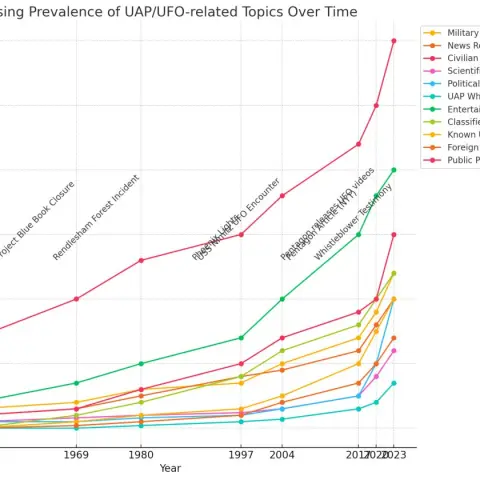
Where have UAPs been spotted ?
This is a Nasa graphic which shows trends in sightings of UAPs.
https://preview.redd.it/l2as2zmyc83b1.jpg?width=624&format=pjpg&auto=…
New 'UAP' video released - or not?
The panel has just been shown a newly-released video showing a series of dots moving across the night sky.
The video was taken by a P-3 naval aircraft in the Western US, which was unable to intercept the objects.
Sean Kirkpatrick, the director of the All-domain Anomaly Resolution Office (AARO) said there was no "oddity" about them, "except that they weren't able to catch them".
The objects, it turned out, where much further away than the aircraft thought.
Later on, it was discovered the lights belonged to commercial aircraft going to a major airport.
The incident, Kirkpatrick said, shows that even highly trained-personnel can misperceive UAP.
'Most people don't like when we point at their backyards'
Nasa's research into UAPs is limited by the number of sensors it has available.
This is partly the result of the fact that there are privacy concerns on the part of the US public.
"We can point the largest collection apparatus in the entire globe at any point we want," says Sean Kirkpatrick.
"A lot of what we have is around the continental United States," he adds.
"Most people...don't like it when we point our entire collection apparatus at your backyard.
“It's not allowed."
How many sightings have there been?
Kirkpatrick says there have been more than 800 cases of UAP sightings.
"We have 50 to 100-ish new reports each month."
But the number of those sightings which are "possibly really anomalous" are 2 to 5% of the total database.
What does Nasa say about aliens?
While aliens have not really been discussed so far, on its website Nasa goes to great pains to tell the public that it has found no evidence of alien life.
But it does say one of its key priorities is “the search for life elsewhere in the universe”.
“Nasa is exploring the solar system and beyond to help us answer fundamental questions, including whether we are alone in the universe,” reads a statement.
The agency has also said is has funded “uncountable” research programmes, including several that have specifically looked for evidence of extra-terrestrial life.
Comments 0
Sign in to join the discussion.
What do you think it is?
Sign in to vote. 0 votes.
👥 Other witnesses
🙋 I saw this tooSaw it too? Add your account — independent witnesses are the best evidence.
🔔 Alerts for sightings like this
🌤️ Sky conditions weather, moon, planets, satellites, aircraft & launches at that time
Source
u/whodontloveboobs on r/UFOs
Citations
https://www.reddit.com/r/UFOs/comments/13wq30m/summary_of_nasas_uap_t…
Nearby sightings within 100 miles
 UFO sighting approx 11.30am Greater Sydney, Australia approx 1999 - 2000Same place
 Australia’s Clark Watson UFO IncidentSame place
 Remember looking this up on Google Earth as a kid. Was this ever debunked? WA Australia January 2008.Same place
 UFO "crash" on Barrow Island - Australia 2020Same place
 UFO Sightings Mandurah Australia - YouTubeSame place
 Shoal Bay sightingSame place
 Sydney NSW - is this debunkable?Same place
 Odd star caught my eye, odd colours for a star to flicker?Same place
 Unidentified light over Western Port Bay, Victoria Australia. Rose, hovered, then descended rapidly. No flight radar contact, near naval base. [47 sec video]Same place
 UFO caught in AUSTRALIA, MelbourneSame place
 Ufo??Same place
 CLOSE ENCOUNTERS DOWN UNDER will premiere on 7Mate in Australia on Thursday 20 April at 8:30pm (AEST)Same place
Similar sightings described alike
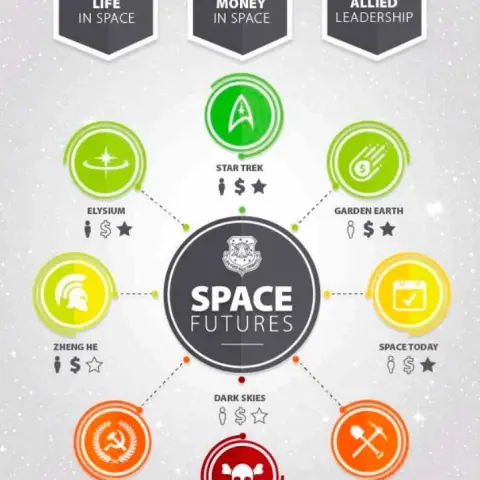 Air Force Space command determined 8 future space scenarios from optimisitc (Star Trek) to pessimistic (Dark Skies) - Very interesting report which shows the bigger picture
 The Hidden Wing - US Air Force UFO Reverse Engineering Programs
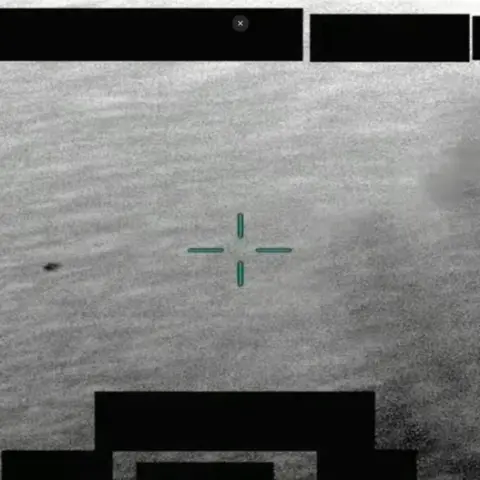 Do Historical “Sky Battles” Resemble Modern UAP Reports? A Source-Critical Study of Nuremberg 1561, Basel 1566, Stralsund 1665, and the PURSUE FilesNuremberg
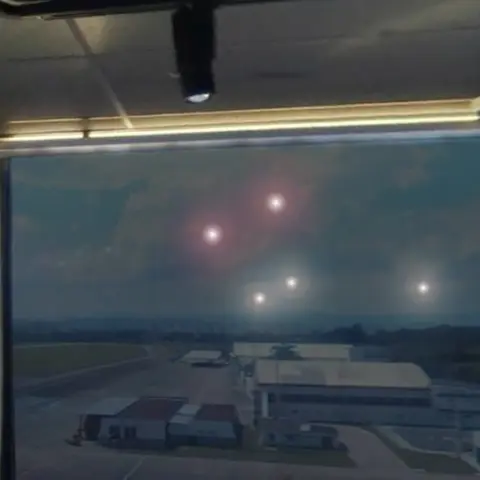 Disclosure from Brazilian Air Force (FAB) sent to the National Archives (AN) with evidencesBrazil · 1986
 "2027": Is there reasoning for the "2027" date being relevant to disclosure based strictly upon U.S. classification laws? (tl;dr: yes, potentially)2024
 Black Thursday, 14 October 1943: the day UAPs turned up in the middle of one of the bloodiest air battles of World War 2Germany
 Data Suggests NHI Disclosure Before 2030
 AARO Senate Hearing - a detailed overview of the hearing and criticisms2024
No comments yet. Start the conversation.