Description
After some recent comments into NSWC Crane i did some research and felt like i should post,
UAP Gerb has a great video on this called “Off-World Technologies Division – UAP Technology Reverse Engineering (https://www.youtube.com/watch?v=QJ215I85d5M)” video which is incredibly deep but highlights US army green beret Randy Anderson testimony stating “Between 2013-2015 he was sent to a special weapons center located near Crane, Indiana to test foreign and domestic weaponry. Due to his TS/SCI clearance, the weapons instructor, a private contractor employee, took him and another soldier deep underground to this anomalous division. The division housed two pieces of technology not made by human hand - a sphere, roughly the size of a basketball, with an indentation on top, as well as a clear tablet-looking device apparently projecting some sort of symbology. Randy was told these devices were considered weapons due to energetic output when recovered from a craft. Both technologies were said to interact with human consciousness.” Jesse Michels has also interviewed Randy Anderson in his “Green Beret: “I Saw Alien Tech In An Underground Base” (Ft. Randy Anderson) (https://www.youtube.com/watch?v=Sct30Qijfv8)“ video he also stated “where i think a lot of this spooky research goes on” in his recent interview (https://www.youtube.com/watch?v=9D3LrJBIgtc)on modern wisdom.
Naval Surface Warfare Center - Crane Division (NSWC Crane)
Department of Defense
Civilian-led federal department responsible for coordinating and supervising all U.S. armed forces. Sets national defense policy and budgets.
↓
Department of the Navy
One of the DoD’s branches, overseeing the U.S. Navy and Marine Corps. Provides maritime power projection, sea control, and expeditionary warfare.
↓
Naval Sea Systems Command (NAVSEA)
The Navy’s largest systems command (headquartered in D.C.). Manages engineering, acquisition, and sustainment for ships, submarines, and warfare systems.
↓
NSWC Crane Division
Located in southern Indiana at NSA Crane. Focus areas: Electronic Warfare, Strategic Missions (nuclear deterrence, secure comms), Expeditionary Warfare (special ops and mobility systems).
multilayered map of NSWC (https://preview.redd.it/wm7ws5u6a9kf1.jpg?width=1920&format=pjpg&auto…)
Base History
NSA Crane was originally established in 1941 under the Bureau of Ordnance as the Naval Ammunition Depot for the production, testing and storage of military weaponry. In the late 1940s, the Bureau added an ammunition quality evaluation unit to expand its quality control system. As the complexity and sophistication of weapons increased through the 1950s and 1960s, Crane’s activities, capabilities and expertise expanded in scope under the newly formed Bureau of Weapons to include small arms, sonobuoy surveillance, microwave tubes, POLARIS missiles and other scientific and engineering support to the Bureau.
In the 1960s, Crane came under the command of the newly established Naval Ordnance Systems Command and began providing technical support for weapons systems including logistics, in-service engineering, repair, overhaul, and design. In the years that followed, Crane’s support included batteries, rotating components, electronic components, failure analysis, and standard hardware and new technologies related to night vision systems.
In 1974, Crane came under the Naval Sea Systems Command (NAVSEA) that was established from the merger of the Naval Ordnance Systems Command and Naval Ship Systems Command. Shortly after in 1975, Crane’s name was changed to the Naval Weapons Support Center (NWSC), which more accurately reflected the true function of the installation.
In 1977 Congress mandated that the Army would be the single-service manager of conventional ordnance, as such, the tenant command, Crane Army Ammunition Activity (CAAA) was established. CAAA subsequently oversaw the loading, assembly and storage of ammunition at the installation.
Crane’s name was changed again in 1992 to Crane Division, Naval Surface Warfare Center (NSWC), whose mission is to provide acquisition and in-service engineering and technical support for sensors, electronics, electronic warfare and special warfare weapons.
In 2004, Naval Support Activity Crane officially stood up as the installation command, charged with ensuring quality support allowing NSWC Crane, CAAA, and other tenant commands to remain focused on their engineering, ammunition, and logistics missions. Today grown from its ordnance roots, Crane is recognized worldwide as a modern leader in diverse and technical products aimed at meeting the needs of today’s warfighter in the defense of the nation.
NSWC Crane's key technical capabilities
Strategic Systems Hardware (https://www.navsea.navy.mil/Home/WarfareCenters/NSWCCrane/WhatWeDo/Te…) Provides full spectrum life cycle scientific, engineering and management functions to design, develop, test, evaluate, and acquire safe, reliable, secure and effective hardware for Strategic Systems. Ensures the required Navy expertise is available to develop, acquire, field, and maintain a credible and reliable strategic deterrent in the areas of high reliability hardware (including radiation hardened electronics and small ordnance), security solutions for safeguarding personnel, property and material aboard ships and at shore installations (excluding expeditionary coastal and riverine facilities), and acoustic sensors and underwater cables (for assigned systems). Includes hardware for the Navy’s Strategic Weapon System (e.g. flight, launch, guidance, fire control, and navigation systems). Also includes security systems, sensor systems, and the logistics associated with operation of shipboard and ground-based strategic and deterrent facilities and systems.
Advanced Electronics & Energy Systems (https://www.navsea.navy.mil/Home/WarfareCenters/NSWCCrane/WhatWeDo/Te… Provides comprehensive scientific and engineering knowledge, skills and facilities for conducting programs in advanced electronics and energy systems. Conducts full spectrum program of applied research, design, development, acquisition, test and evaluation, and life cycle management to provide safe, trusted, reliable and effective advanced electronic products. Advanced electronics include active and passive electronic devices, circuit cards, interconnect technologies, electronic controls, solid state transmit/receive modules, microwave tubes and other radio frequency devices. Maintains subject matter expertise in failure analysis, counterfeit technologies, radiation hardening, design, and test and evaluation of advanced electronics. In addition, maintains Naval Sea Systems Command’s (NAVSEA's) technical authority in anti-tamper technology to include vulnerability assessments, technology and program protection planning, and supply chain risk management, as well as subject matter expertise to maintain the Navy's DoD executive agent responsibilities in microwave tubes and printed circuit board technology. For energy systems, provides comprehensive life cycle management for safe, reliable and effective devices. This includes requirements definition, design, development, prototyping & limited production, acquisition & acquisition engineering, product improvement, technology evaluation and insertion, standardization, test & evaluation, safety certification (including high energy battery systems technologies such as lithium), production engineering, in-service engineering, obsolescence management, maintenance, Fleet training, and system retirement. Energy systems includes batteries, advanced high energy density storage devices, energy transfer devices, and alternative and renewable energy devices.
Special Warfare & Expeditionary Systems Hardware (https://www.navsea.navy.mil/Home/WarfareCenters/NSWCCrane/WhatWeDo/Te… Provides full spectrum life cycle support functions to provide safe, reliable and effective special missions hardware and associated software primarily for use by the individual warfighter including weapons, munitions, and electronic systems for special operations and expeditionary forces. Support includes applied research (excluding energetics material formulations) requirements analysis, systems engineering, design, development, rapid prototyping, test and evaluation, acquisition, integration, logistics, fielding and in service support. Weapons include small arms (less than 20mm). Munitions include small arms ammunition, hand emplaced and man-portable anti-personnel and anti-material munitions. Electronic systems include electro-optic and visual augmentation sensors, electronic warfare, personnel and vehicle scanning and command and control systems as assigned. Weapons, munitions, and electronic systems provide communications, surveillance, detection, tracking, targeting and engagement capabilities in support of special missions.
Infrared Countermeasures & Pyrotechnics (https://www.navsea.navy.mil/Home/WarfareCenters/NSWCCrane/WhatWeDo/Te… comprehensive life cycle management functions to provide safe, reliable and effective infrared countermeasures, countermeasures systems, and pyrotechnics for a variety of functions including platform self-protection, target enhancement, illumination and signaling and marking. Provides total life cycle support except research, development and scale-up of energetic materials for all Navy infrared countermeasures, countermeasures systems and pyrotechnics. Provides Navy expertise and leadership for infrared countermeasures, countermeasures systems, and pyrotechnics.
Sensors & Surveillance Systems (https://www.navsea.navy.mil/Home/WarfareCenters/NSWCCrane/WhatWeDo/Te… comprehensive engineering knowledge, skills and facilities for conducting development, acquisition, test and evaluation and full spectrum life cycle systems engineering for surface, air and ground sensors and surveillance sub-systems, systems, and components. On radar systems provides production engineering support, for the development, acquisition, test and evaluation, spiral development and support of radar subsystems and hardware components. This includes support and maintenance of fielded systems and hardware components. On electro-optic and infrared portable and platform mounted air, surface, and ground surveillance, targeting, laser, and visual augmentation systems hardware and associated software, additional capabilities include applied research, development, modeling, test and evaluation, acquisition, fielding, in-service engineering, logistics, product improvement, maintenance and repair. On assigned surface, ground and air signals intelligence (SIGINT) (communications intelligence (COMINT) & electronic intelligence (ELINT)) systems, subsystems and components, including hardware and associated software, leverage multi-domain and full spectral expertise to perform requirements generation and requirements decomposition for development of integrated sensors and advanced capabilities for improved battle space/situational awareness and including, rapid response prototyping and fielding, supportability and technical analyses, in-service engineering, in conjunction with a comprehensive test and evaluation program to ensure sensors and surveillance systems meet or exceed specified requirements.
Electronic Warfare Systems (https://www.navsea.navy.mil/Home/WarfareCenters/NSWCCrane/WhatWeDo/Te… technical leadership and execution throughout the lifecycle for air, ground, undersea, and surface electronic warfare (EW), including signals intelligence (SIGINT) and information operations (IO) systems. Leads research and development (R&D), system engineering, acquisition engineering and logistics, test and evaluation (T&E), design verification, and technical evaluation (TECHEVAL) / operational evaluation (OPEVAL) for all surface and undersea EW elements, and for all ground and air EW capabilities. Develops EW system and element technical requirements. For surface and undersea EW, provides the cohesive EW element for combat systems integration and supports the integration effort. Collaborates with other Warfare Center activities to facilitate the transition of new technologies into existing and planned EW capabilities. Supports higher level combat system activities relative to the evolutionary acquisition strategy. Leads logistics support services for fielded air, surface and undersea EW systems including supply chain management, performance assessments, continual technical refresh, obsolescence management, configuration control, data management services, and maintenance, overhaul and depot repair.
Following the money trail
$3B and Counting: The S²MARTS OTA’s Impact on Defense Technology (March 25, 2025)
https://nstxl.org/3b-and-counting-s2marts-otas-impact-on-defense-tech… (https://nstxl.org/3b-and-counting-s2marts-otas-impact-on-defense-tech…)
The NSTXL article explains that the S²MARTS OTA, created by NSWC Crane and managed by NSTXL, has surpassed $3 billion in prototype project awards since its launch in 2019, becoming a central accelerator for defense innovation by providing a faster alternative to traditional acquisition. With 54 opportunities awarded to 133 performers and nearly 1,000 consortium members—over 81% of them non-traditional contractors—the program focuses on advancing hypersonics, microelectronics, electromagnetic spectrum operations, and strategic systems, all high-priority areas for the Department of Defense. Leadership from both NSWC Crane and NSTXL emphasize that S²MARTS’ flexibility allows it to rapidly connect innovative companies with military needs, strengthen supply chain resilience, and maintain U.S. technological superiority, making it a multi-billion-dollar engine for prototyping and delivering critical capabilities to the warfighter.
SAIC wins $133M NSWC contract (August 20, 2020)
https://intelligencecommunitynews.com/saic-wins-133m-nswc-contract/ (https://intelligencecommunitynews.com/saic-wins-133m-nswc-contract/)
In August 2020, the U.S. Navy awarded Science Applications International Corp. (SAIC) a $133 million contract to continue providing mission engineering and integration services to the Maneuver, Engagement, and Surveillance Systems Division at NSWC Crane. SAIC’s responsibilities include engineering, modeling and simulation, analysis, logistics, quality assurance, and technical support for tactical intelligence, surveillance, and reconnaissance systems across component, subsystem, and system levels. The contract builds on SAIC’s longstanding presence—roughly 550 specialists based at Crane have supported the warfighter for over 30 years—solidifying their role in enhancing mission readiness globally.
NSWC Crane holds ribbon cutting ceremony for new $100M radiation-hardened microelectronics testing capability (Sept. 20, 2024)
https://www.navsea.navy.mil/Media/News/Article/3912749/nswc-crane-hol… (https://www.navsea.navy.mil/Media/News/Article/3912749/nswc-crane-hol…)
On July 31, 2024, NSWC Crane inaugurated its new Short Pulse Gamma (SPG) radiation-hardened microelectronics test facility—nicknamed “Bumblebee”—with a ribbon-cutting ceremony. The facility provides a prompt-dose gamma environment for RDT&E testing crucial to missile defense, nuclear modernization, and space systems, backed by half a century of Crane’s radiation testing expertise. Equipped with specialized features like reinforced concrete shielding, ESD-controlled work areas, RF-shielded rooms, and a one-ton-capacity movable test table, SPG represents the first phase of a broader radiation modernization plan. The multi-phase effort includes upcoming irradiator, flash X-ray, and neutron source facilities, part of a larger $100 million modernization investment at Crane, intended to support concurrent and future strategic microelectronics testing needs. Leadership emphasized the facility’s importance to national resilience and the continued commitment to delivering high-reliability components for Defense Department priorities.
Dallas’ Jacobs Wins Nearly $100M Naval Surface Warfare Center Underwater Launch Test Capability Project (Dec 14, 2022)
https://dallasinnovates.com/dallas-jacobs-wins-nearly-100m-naval-surf… (https://dallasinnovates.com/dallas-jacobs-wins-nearly-100m-naval-surf…)
Jacobs, a Dallas-based engineering firm, was awarded a $99.8 million contract to develop the Underwater Launch Test Capability (ULTC) services for NSWC Crane. The company is responsible for the integration and activation of specialized test equipment, commissioning and verification of the new test facility, and ongoing support for launch test operations. Mark Walter, SVP of Advanced Engineering, Research and Operations at Jacobs, emphasized that their global experience with world-class test facilities—and ongoing support since 2019—positions them to deliver technical solutions and lifecycle management that “protect and enable the warfighter.”
SAIC win $63m US Navy contract for hypersonic weapon concepts (January 8, 2024)
https://www.naval-technology.com/news/saic-win-63m-us-navy-contract-f… (https://www.naval-technology.com/news/saic-win-63m-us-navy-contract-f…)
The U.S. Navy awarded Science Applications International Corporation (SAIC) a $63 million contract to develop advanced hypersonic weapon concepts and strategic mission solutions. This award underscores the Navy’s focus on next-generation high-speed strike technologies and opens the door for SAIC to contribute to critical capabilities in hypersonics and related strategic systems
DoD and OSD ManTech Issues $26.6M in Awards to Accelerate Hypersonics Technology Development (April 22, 2024)
https://www.dodmantech.mil/News/News-Display/Article/3750144/dod-and-… (https://www.dodmantech.mil/News/News-Display/Article/3750144/dod-and-…)
On April 22, 2024, the Department of Defense (OSD ManTech) announced $26.6 million in awards for the Joint Acceleration of Hypersonic Vehicle Aerostructure Alternatives (JAHVAA) initiative. Structured through the S²MARTS OTA managed by NSTXL and sponsored by NSWC Crane, this effort supports nine performers over a 36-month period to develop and test alternative high-temperature materials for hypersonic systems. The goal is to expand the U.S. industrial base's capability to design and fabricate more affordable, flexible thermal protection systems for hypersonic weapons, reducing transition risks.
($unknown) NISE / ILIR / IAR Innovation Programs
https://www.navsea.navy.mil/Media/News/Article/1660238/navy-innovator… (https://www.navsea.navy.mil/Media/News/Article/1660238/navy-innovator…)
In 2018, Navy scientists at NSWC Dahlgren Division presented 20 cutting-edge projects through the ILIR/IAR research programs, showcasing innovations in quantum physics, AI, cybersecurity, nanomaterials, and human-systems integration. Highlights included quantum interference research with potential for anti-tamper systems, carbon nanotube composites for electromagnetic protection and directed energy, moving-target IPv6 defenses for IoT devices, and data visualization tools to improve Aegis training. Funded by the Office of Naval Research, these efforts both develop future Navy capabilities and cultivate the next generation of military scientists while opening paths for transition to industry through Cooperative R&D Agreements.
I think its easy to tell why people have been told to stay away from NSWC, The word used commonly “total life cycle support” I think needs to be given more credence. Its the one stop shop for some of our most advanced navy war fighting tech including
Land → small arms, special operations gear, expeditionary comms, surveillance sensors
Air → radar, EW pods, countermeasures, UAV payloads, hypersonics
Sea → submarine launch systems, underwater sensors, torpedoes, naval commsSpace → radiation-hardened microelectronics, satellite comms, strategic deterrent systems
Cyber/EM Spectrum → spectrum dominance, anti-tamper, cyber defense, quantum experiments
Nuclear → missile guidance, strategic weapon systems, radiation testing
Electronic Warfare → jamming, SIGINT, counter-communications, decoys
Energy → advanced batteries, high-density storage, power systems for field and naval use
Directed Energy → laser and RF weapon development, counter-drone systems
Night Vision / EO-IR → sensors, targeting, surveillance optics
Countermeasures → flares, IR decoys, expendables, anti-radar materials
Materials → high-temp composites, anti-tamper coatings, stealth materials
Robotics / Autonomy → unmanned ground/sea/air support systems
Special Warfare → individual weapons, munitions, comms tailored to SEALs and SOCOM
Logistics → lifecycle sustainment, obsolescence management, depot-level repair
Quantum / Advanced Physics → early R&D in quantum interference, secure comms
Space Control → satellite survivability, radiation-hardened electronics, space situational awareness
Cyber Defense → moving target defenses, anti-tamper software protections
Training / Simulation → immersive tools for Aegis crews, EW training sims
Spectrum Operations → EM dominance, detection, targeting, communications security
It does not sound out of their wheel house to detect, intercept, retrieve across land, air, sea and or space..
https://preview.redd.it/sulhijy8b9kf1.jpg?width=2100&format=pjpg&auto…
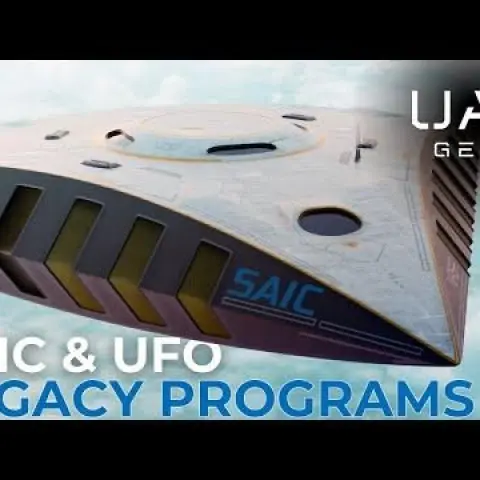
Saic is also another interesting talking point in this. I again recommend watching UAP Gerbs “UFO Legacy Programs - Science Applications International Corporation (SAIC) (https://www.youtube.com/watch?v=9p99lTsC7wQ&t=2892s)“ they have a building within a mile of the front entrance to NSWC
https://preview.redd.it/6viu3o9ub9kf1.jpg?width=1332&format=pjpg&auto…
Comments 0
Sign in to join the discussion.
What do you think it is?
Sign in to vote. 0 votes.
👥 Other witnesses
🙋 I saw this tooSaw it too? Add your account — independent witnesses are the best evidence.
🔔 Alerts for sightings like this
🌤️ Sky conditions weather, moon, planets, satellites, aircraft & launches at that time
Source
u/navinufg on r/UFOs
Citations
https://www.reddit.com/r/UFOs/comments/1mvuv8y/naval_surface_warfare_…
Nearby sightings within 100 miles
 1st hand investigation into Off World Technologies from 1st hand witness/US Army Green Beret. Btwn 2013/2015 "RA" sent to special weapons ctr near Crane, IN, testing foreign/domestic weaponry. Incs…Same place
 What am I seeing in the sky in Indianapolis tonight (9:45 ET)?117 km · 72 mi
 First Disc-shaped UAP caught on photographic film; 1950 Louisville, KY 🛸122 km · 76 mi
 Saw this on my break at work today Indiana124 km · 77 mi
 A business card my step dad received from a man 40+ years ago124 km · 77 mi
 Multiple non-strobing lights with different trajectories near the Big Dipper — what are these?124 km · 77 mi
 Spotted behind clouds (Indiana) August 22, 2025 at 2:55am. White particle fog followed behind sighting124 km · 77 mi
 Here's a video to support the other post I made.124 km · 77 mi
 Found in a Facebook group from Northwest Indiana124 km · 77 mi
 Loud Boom and Flash in Central Indiana this Morning❗️124 km · 77 mi
 Weird light in the sky?124 km · 77 mi
 Sharing a recreation of what I saw September 2012 in Central Indiana124 km · 77 mi
Similar sightings described alike
 The Golden-Haired, Bare-Skinned Alien of 1897Springfield
 UFO Crash Retrievals: Ten Stories of Crashed UFOs, Alien Bodies & Reverse Engineering of Extraterrestrial CraftRoswell
 Mage, Brazil UFO Mega postMagé · 2020
 My Thoughts on The UAP/NHI/ORBS & 3i/atlas & GovernmentOregon
 UFO Legacy Programs - Science Applications International Corporation (SAIC)
 What the Secret Pentagon UFO Files Reveal About World War 2's Foo Fighters -- Behind the scenes, military intelligence was deeply concerned about Allied pilot UFO reports and conducted an in-depth…France
 Do Historical “Sky Battles” Resemble Modern UAP Reports? A Source-Critical Study of Nuremberg 1561, Basel 1566, Stralsund 1665, and the PURSUE FilesNuremberg
 My observation - finally after 20 years I decided to present my story to a wider audience - UPDATE and some important topic
No comments yet. Start the conversation.