SETI
From the UAP Encyclopedia, the open encyclopedia of UFO and UAP history · 🏛️ Program or study
Contents 5

| Type | Program or study |
|---|---|
| Also known as | Search for Extraterrestrial Intelligence |
| Began | 1960 (Project Ozma) |
| Method | Radio and optical telescopes |
| Famous candidate | The Wow! signal (1977) |
SETI, the Search for Extraterrestrial Intelligence, is the scientific effort to detect signs of technology made by beings on other worlds — usually radio or laser signals. It is a separate field from ufology: SETI scientists look for evidence across interstellar distances with telescopes, not for visiting craft. No confirmed signal has been found.[1]
Beginnings
In 1959 physicists Giuseppe Cocconi and Philip Morrison suggested listening near the 1420 MHz radio line of hydrogen, a frequency any radio astronomer would know. In April 1960 astronomer Frank Drake ran Project Ozma at Green Bank, West Virginia, listening to the nearby stars Tau Ceti and Epsilon Eridani. He heard nothing artificial. In 1961 he wrote the Drake equation to estimate how many civilisations might be detectable.[1][2]
Famous searches
- The Wow! signal (1977): a strong, narrow-band burst recorded by Ohio State University's Big Ear telescope. It was never heard again.[1]
- NASA's search: NASA began a large survey in 1992, but Congress cancelled its funding in 1993. Work continued with private money, notably at the SETI Institute, founded in 1984.[1][3]
- SETI@home (1999–2020): millions of home computers analysed data from the Arecibo radio telescope.[4]
- Breakthrough Listen: a 10-year, US$100 million program announced in 2015 by Yuri Milner and Stephen Hawking, using the Green Bank and Parkes telescopes.[5]
SETI and UFOs
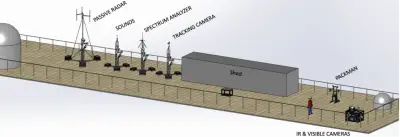
Most SETI scientists are sceptical of UFO reports. Carl Sagan, who supported SETI, argued that extraordinary claims require extraordinary evidence, and that UFO cases had not met that bar. Some astronomers now also look for physical objects: Harvard's Galileo Project, led by Avi Loeb, built observatories to record unidentified aerial objects and searches for interstellar objects such as ʻOumuamua and 3I/ATLAS.[1]
The silence
After more than sixty years without a confirmed signal, scientists still debate what the silence means. It is the heart of the Fermi paradox: if civilisations are common, why have we not seen or heard any? Searches have so far covered only a tiny fraction of the stars, frequencies and times that could carry a signal.[1]
References
- Search for extraterrestrial intelligence — Wikipedia · en.wikipedia.org
- Project Ozma — Wikipedia · en.wikipedia.org
- SETI Institute · seti.org
- SETI@home — Wikipedia · en.wikipedia.org
- Breakthrough Listen — Wikipedia · en.wikipedia.org
Facts in this article are drawn in part from the Wikipedia articles “Search for extraterrestrial intelligence”, “Project Ozma”, “SETI@home”, “Breakthrough Listen”, available under the CC BY-SA 4.0 licence.
This page was last edited on 14 November 2026. Articles are written in our own words from the sources listed under References; disputed claims are attributed to the people who made them.




No discussion yet.