Alien implants
From the UAP Encyclopedia, the open encyclopedia of UFO and UAP history · 📖 Term
Contents 5
Summary
In ufology, alien implants are physical objects that people who believe they were abducted by aliens claim were surgically placed in their bodies for mind control or biotelemetry. Mainstream scientists and skeptics have paid the idea very little attention, and objects removed from claimants have analyzed as ordinary debris like glass, metal fragments, and carbon fibers. Roger Leir, a California podiatrist, claimed to have removed about 50 such objects before his death in 2014, though critics found his evidence and claims to be unsupported or ordinary.

| Type | Term |
|---|---|
| Also known as | alien implant |
In ufology, alien implants are physical objects that some people who believe they were abducted by aliens say were surgically placed in their bodies. Their supposed functions include telepresence, mind control, and a kind of biotelemetry, like the tags scientists put on wild animals. They are often said to transmit radio signals back to their makers.[1][2] The idea has drawn very little attention from mainstream scientists.[1] Objects removed from claimants and analysed have turned out to be ordinary debris, such as glass, metal fragments and carbon fibres, of the kind people pick up in everyday accidents.[1][2]
History

According to Peter Rogerson, writing in Magonia magazine, the earliest mention of an alien implant came in a March 1957 interview on Long John Nebel's radio show. Ufologist John Robinson recounted a neighbour's claim to have been kidnapped by aliens in 1938 and kept quiet by "small earphones" placed behind his ears.[1] Implants had already appeared on film: the 1953 science-fiction film Invaders from Mars showed aliens inserting small needles into victims' necks and stomachs.[1]
- Betty Andreasson. A Massachusetts woman, she said aliens implanted a device in her nose during an abduction in 1967. The claim was publicised by Raymond E. Fowler in The Andreasson Affair.[1] Skeptic Joe Nickell, in his 2001 book Real Life X-Files, wrote that the implant idea did not become widely known until Fowler wrote about this case in 1979.[2]
- Dorothy Wallis. A Canadian woman, she described a similar experience in 1983.[1]
- Whitley Strieber. Writers such as Whitley Strieber went on to popularise the familiar abduction pattern, including implants.[1]
- John Mack. The Harvard psychiatrist wrote in Abduction: Human Encounters with Aliens that he examined a "thin, wiry object" 0.5 to 0.75 inches (13–19 mm) long. A 24-year-old client gave it to him, saying it had come out of her nose after an abduction. See John Mack.[1]
Claimants have had X-rays that showed objects, and some doctors have removed them.[2]
Roger Leir
The name most linked with alien implants is Roger Leir, a California podiatrist and foot surgeon. By his death in 2014 he claimed to have removed about 50 of them from patients. Skeptic Brian Dunning called that number "gravely suspicious," since it seemed to have doubled twice in Leir's last years with almost no new photographs or case studies.[1][2] In a 2012 presentation at the International UFO Conference, which Dunning treated as the best available evidence, Leir made several claims:[2]
- The implants transmitted on a "deep space frequency" of 14.749650 MHz.
- They were encased in a capsule of keratin or collagen.
- They had "strong" magnetic fields of about 10 milligauss.
- A nickel-iron sample was meteoric, judged by its ratio of nickel to iron.
Other claims, unsupported by evidence, include carbon nanotubes in the objects, implants that move or reassemble themselves, and implants that resist being cut.[2]
Skeptical analysis

In a 2016 Skeptoid episode, Dunning said he had begun hoping to find finely made micro-devices, but found "abysmal evidence."[2]
- Pet tags. A widely shared photograph of four small tubular "implants" in a man's palm showed ordinary RFID tags of the kind vets put in pets.
- The frequency. 14.7 MHz lies in the ordinary high-frequency band (3–30 MHz) used for aviation, emergency, shortwave, amateur and maritime radio. It is far outside the atmospheric windows that would suit communication with "deep space." It is also almost the same as 14.7456 MHz, the clock frequency of the common RS-232C serial interface found in computers and lab equipment.
- Glass. The Raman spectroscopy results Leir showed matched human tissue and one other compound, silica glass, from an object removed from a patient's toe.
- Nickel-iron. Nickel-iron is common in industrial alloys and splinters, and whether it came from a meteorite is judged by its isotopes, not the nickel-to-iron ratio.
- The capsule. This is a foreign-body granuloma, the body's normal way of walling off debris.
- Magnetism. A 10 milligauss difference is trivial beside Earth's own field of 250–650 milligauss.
Dunning quoted Leir telling his audience that a planned TV series, Alien Intent, had a contract specifying "no debunkers, and no skeptics." Leir walked away when the network wanted skeptics included. Dunning argued that by excluding every non-alien explanation, Leir guaranteed his own errors.[2]
Nickell likewise found that supposed implants appear to be shards of glass, jagged bits of metal and carbon fibres, often lodged in toes, hands and shins. He cited Virgil Priscu, a department head at Kaplan Medical Center: "No mystery, no implants." Ordinary objects picked up in a fall or by walking barefoot become surrounded by scar tissue.[1] The Wikipedia account compares the phenomenon to the "matchbox sign" seen in delusional parasitosis.[1]
Notes on the earlier version of this article
- Susan Blackmore. The earlier version said psychologist Susan Blackmore had published an analysis of a claimed implant. This is not covered in the sources read here.[1]
- Leir's count. The earlier version gave Leir's figure of about 50 implants without comment. Dunning doubted the figure.[2]
References
- Alien implants — Wikipedia · en.wikipedia.org · archived copy
- Brian Dunning, "Alien Implants", Skeptoid #519 (17 May 2016) · skeptoid.com · archived copy
Facts in this article are drawn in part from the Wikipedia article “Alien implants”, available under the CC BY-SA 4.0 licence.
🛸 Sightings & submissions about this 3
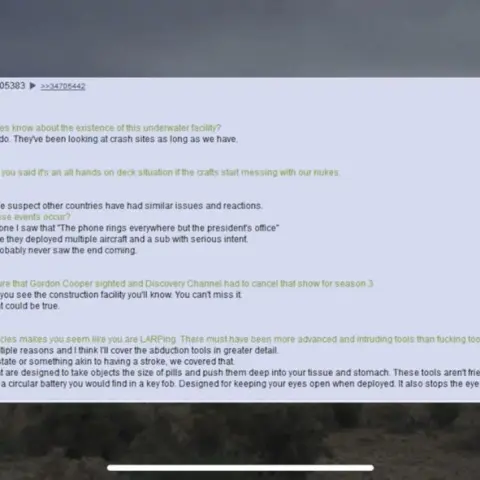 4Chan leak also mentioned Implants as talked about by Lue Elizondo
 Dr. Roger Leir, a true pioneer in this extraordinary field of scientific research, investigates this disturbing mystery and the surgical removal of alien implants from self-proclaimed abduction…
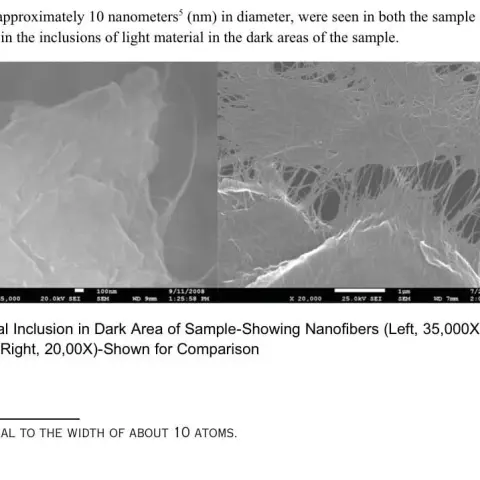 The most comprehensive analysis of an alien implant to date has revealed a ceramic covering over a meteor sourced metal core which contains a further ceramic lattice and carbon nanotubes which are…Sep 6, 2008
This page was last edited on 31 October 2026. Articles are written in our own words from the sources listed under References; disputed claims are attributed to the people who made them.


No discussion yet.