Hessdalen lights
From the UAP Encyclopedia, the open encyclopedia of UFO and UAP history · 🛸 Case
Contents 13
Summary
The Hessdalen lights are unidentified, recurring light phenomena that have been seen periodically since at least the 1930s over the Hessdalen valley in Norway. They became world-famous during a surge of sightings in the early 1980s, leading to decades of scientific research. While some sightings have been explained as astronomical bodies, aircraft, car headlights, or mirages, the remainder stay unexplained and lack scientific consensus.

| Type | Case (recurring light phenomenon) |
|---|---|
| Norwegian name | Fenomenet i Hessdalen |
| Place | Hessdalen valley, Holtålen Municipality, Trøndelag, Norway, about 127 km south of Trondheim |
| Reported since | At least the 1930s (the project cites reports from the 1800s) |
| Peak activity | December 1981 – mid-1984, 15–20 sightings a week |
| Research | Project Hessdalen (1983–), Hessdalen AMS "Blue Box" (1998–), EMBLA (1998–2001) |
| Main institutions | Østfold University College; Italian National Research Council; University of Bologna |
| Also known as | Hessdalen phenomenon |
The Hessdalen lights are unidentified lights that have been seen periodically since at least the 1930s over a 12-kilometre (7.5-mile) stretch of the Hessdalen valley in rural central Norway, about 127 km south of Trondheim. They became world-famous during an intense wave of sightings in the early 1980s and are among the very few UFO-type phenomena to have been studied for decades with permanent scientific instruments.[1][2][4]
Some sightings have turned out to be stars, planets, aircraft, car headlights and mirages, but the rest remain unexplained, and there is no scientific consensus on what produces them. Proposed explanations include burning airborne dust, a dusty plasma created by radon decay, and electrical effects from the valley's rocks.[1]
Appearance
The lights appear both by day and by night and seem to float through and above the valley. They are usually bright white, yellow or red and can appear above or below the horizon. They may last from a few seconds to well over an hour. Sometimes they move at enormous speed; at other times they sway slowly back and forth, or hover in mid-air. Project Hessdalen distinguishes several types of phenomena, broadly "lights" and "crafts", and says they have sometimes been detected by radar and seen at the same time, and sometimes only on radar or only by eye.[1][6]
History

Unusual lights have been reported in the region since at least the 1930s, and Project Hessdalen says reports go back to the 1800s. The first sighting to become publicly known took place on the night of 8 December 1981, when a married couple, Åge and Ruth Marry Moe, saw "a burning fireball" in the evening sky from their kitchen window. Soon others in the valley said they had seen the lights too, people began talking about UFOs, and the story caused a sensation across Norway and later abroad.[1][4][6]
Activity was especially high between December 1981 and mid-1984, when the lights were seen 15 to 20 times a week, drawing many tourists who stayed overnight to watch. By 2010 sightings had fallen to 10 to 20 a year; Project Hessdalen gives a current figure of about 20 a year, while suggesting the true number may be much higher.[1][6]
Research

Project Hessdalen
In the summer of 1983 the Norwegian and Swedish UFO organisations UFO-Norge and UFO-Sverige set up a research group, Project Hessdalen, to find the cause. It carried out two instrumented field investigations, in January–February 1984 and again in 1985, led by the college lecturer Erling P. Strand, who went on to lead the investigations at Østfold University College, working since the 1990s with Bjørn Gitle Hauge. The project says it received support from the Norwegian military between 1983 and 1985, and that its 1984 field report recorded 53 observations of anomalous lights, including camera images, radar detections and magnetometer readings, and concluded that the phenomenon is measurable. Project Hessdalen became a registered non-profit organisation in 2023.[1][4][6]
In 1997–1998 a group of students, engineers and journalists working together as "The Triangle Project" recorded lights in a pyramid shape that bounced up and down.[1][4]
The Blue Box
On 7 August 1998 the Hessdalen Automatic Measurement Station (Hessdalen AMS) went into service in the valley under Østfold University College to register and record the lights automatically. Because its equipment is housed in a blue shipping container, it is known as the "Blue Box"; Project Hessdalen calls it the world's first automated anomaly-detection system. It was originally equipped with a magnetometer, two black-and-white TV cameras and a colour camera; a camera and a very-low-frequency antenna were added in 2004, and today it streams live camera footage around the clock. Because it measures only a limited number of parameters, it cannot explain everything it records. In winter 2018 a new, partly staffed field station, the "White Box", was set up on the plateau south of the lake Øyungen.[2][4][5][6]
EMBLA and later work
From 1998 to 2001 a programme called EMBLA brought established scientists and students together to research the lights, with Østfold University College and the Institute of Radio Astronomy at the University of Bologna, part of the Italian National Research Council, as the leading institutions. In 2016 the Olav Thon Foundation granted Østfold University College 1.5 million kroner over three years for a student research project in Hessdalen, and the college offers a 10-credit course in field research in the valley. The volunteer-run Project Hessdalen continues to hold field trips and conferences and makes its camera images freely available.[1][2][3][4]
Hypotheses
Despite decades of research there is no agreed explanation, though several possibly plausible theories have been proposed. Some sightings have been positively identified as misperceptions of astronomical bodies, aircraft, car headlights and mirages.[1]
Burning dust
One explanation attributes the lights to a poorly understood combustion of airborne dust from mining in the area. The analysis identified hydrogen, oxygen and other elements including titanium, and it was thought this happens in Hessdalen because of the valley's large deposits of scandium. In July 2007 it was reported that optical spectrum analysis and electromagnetic measurements had shown the lights to be a burning vortex of gas or plasma, possibly with a solid core, involving oxygen and nitrogen as well as sodium and scandium. The Norwegian press proclaimed that "the mystery in Hessdalen is solved", but researchers still did not know what lights the phenomenon up or where it gets its "fuel".[1][4]
Dusty plasma and radon
A hypothesis put forward in 2010 suggests the lights are clusters of tiny "Coulomb crystals" in a plasma formed when alpha particles from radon decay ionise the dusty air. This dusty-plasma model may explain several observed properties, including the lights' oscillation, geometric structure and light spectrum, with the alpha particles accounting for helium lines in the spectrum. In 2004 the physicist Massimo Teodorani found higher radioactivity in rocks near where a large ball of light had been reported, and computer simulations show that dust in ionised gas can organise itself into double helixes, like some of the lights.[1]
Piezoelectricity
Another hypothesis explains the lights as a product of piezoelectricity: many crystalline rocks in the valley contain quartz grains, which produce intense electric charge under strain. In a 2011 paper based on the dusty-plasma theory, Gerson Paiva and Carlton Taft argued that piezoelectricity alone cannot explain the geometric structures seen at the centre of some lights. They proposed a mechanism in which interacting plasma waves and low-frequency geoelectromagnetic waves eject small balls of light from a central one at a theoretical speed of about 10,000 metres per second, compared with an observed speed of about 20,000 m/s for some ejected balls. In their model the ejected balls are always green because only oxygen ions, which have green emission lines also seen in auroras, are carried by these waves, while the white central ball has a temperature of about 5,000 K. They also explained the lights' unusual, flat-topped spectrum as typical of dense ionised gas, and attributed the colour distribution of the light balls to electrons accelerated by electric fields as piezoelectric rocks fracture underground.[1]
A natural battery
In 2014 Jader Monari proposed a model in which the valley acts like a geological battery: its two sides are the electrodes and the river Hesja the electrolyte. Gas bubbles rising into the air become electrically charged and luminesce, producing the lights.[1]
Similar phenomena
The Hessdalen lights are often compared with other "ghost light" or "earthlight" phenomena around the world, such as the Marfa lights in Texas, the Brown Mountain lights in North Carolina, the Min Min light in Australia and the Longdendale lights in England, as well as with ball lightning and St. Elmo's fire. Their long-term instrumental monitoring makes them unusual among unexplained aerial phenomena.[1][3][4]
References
- Hessdalen lights — Wikipedia · en.wikipedia.org · archived copy
- Project Hessdalen · hessdalen.org · archived copy
- EMBLA 2000 report, Project Hessdalen (PDF) · web.archive.org · archived copy
- Fenomenet i Hessdalen — Wikipedia (in Norwegian) · no.wikipedia.org
- Hessdalen AMS — Wikipedia · en.wikipedia.org
- About Project Hessdalen — Project Hessdalen · hessdalen.org
Facts in this article are drawn in part from the Wikipedia articles “Hessdalen lights”, “Fenomenet i Hessdalen (in Norwegian)”, “Hessdalen AMS”, available under the CC BY-SA 4.0 licence.
🛸 Sightings & submissions about this 37
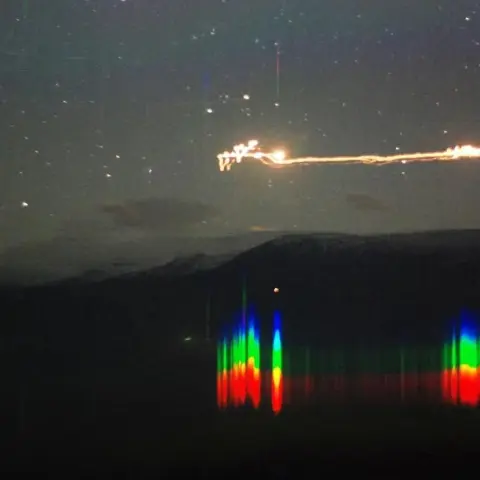 Scientists tell me mysterious "lights" over a mountain valley in Norway could explain two of the most notable cases from the Trump administration's UFO filesNorway
 Strange lights in Norway this morningNorway
 Green Pulsating Orb!? NorwayDec 3, 2025 · Norway
 Two orange objects over Oslo - moments ago - they merged into one.Oct 10, 2025 · Oslo
 A UFO/Orb? seems to be scanning the forest with a beam of light.Oct 5, 2025 · Storås
 Multiple Orbs spotted in NorwayNorway
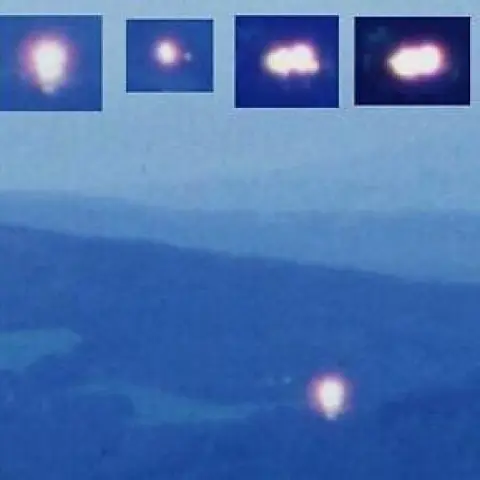 The Hessdalen Lights: A Related Phenomenon?Norway
 These "things" in the air in Norway. Read post for added contextNorway
 Spotted light moving up and down from planeDec 26, 2024 · Tromsø
 Strange object Lovund NorwayNorway
 My friend was walking his dog and caught something zooming across the sky before it disappeared into a cloudOct 17, 2024 · Norway
 What the "balls of light" actually look like.Georgia
 Latest video from Hessdalen. Research still continues.Hessdalen
 Norway - UFO crashed in 1947 spotted underwater by a research teamMar 2, 2024 · Norway
 On Thursday, two🇳🇴F-35 fighter jets were scrambled in search for a UFOBetween Andøya and Evenes
 "star" that "isn’t a star" around AndørjaAndørja
 Hessdalen, Norway, documentaryJan 6, 2024 · Norway
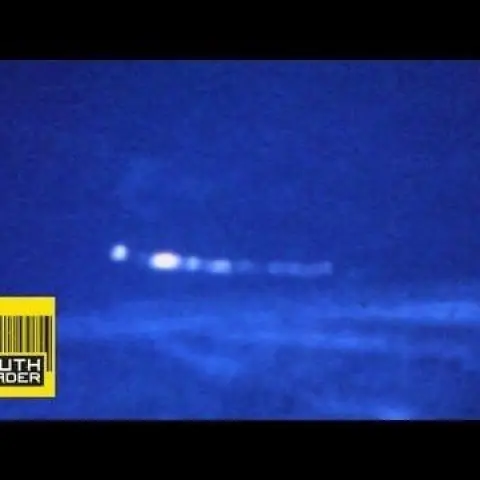 Hessdalen Lights: Sometimes it really is just swamp gasNorway
 Ball of light/plasma changing shape in the woods next to a road. Seen multiple night.Michigan
 TRIANGLES, ERRATIC LIGHTS, ETC on Hessdalen phenomena website!! Reddit, WE NEED YOUR HELP!!! We need to find the best videos, here's what i've found within the first minutes:Hessdalen
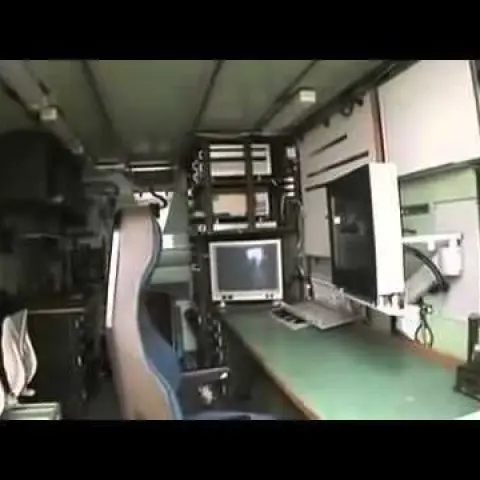 A documentary film about a very well researched phenomena in Hessdalen, Norway. The documentary is old, but still very good. Take a look if you want to watch something UFO-related that is based on…Norway
 These floating balls of light have been in my woods every night for months, does anybody have a clue what it could be? They usually disappear before we can get a video
 New Images and Zoom of the UFO in NorwayNorway
 Reupload: A fireball caught zooming across the sky in Norway.Norway
Showing the 24 newest of 37.
This page was last edited on 31 October 2026. Articles are written in our own words from the sources listed under References; disputed claims are attributed to the people who made them.

No discussion yet.