Shag Harbour UFO incident
From the UAP Encyclopedia, the open encyclopedia of UFO and UAP history · 🛸 Case
Contents 11
Summary
The Shag Harbour UFO incident occurred on the night of October 4, 1967, in Shag Harbour, Nova Scotia, Canada, where multiple witnesses reported a lit object descending and striking the waters of the Gulf of Maine. Police, fishermen, the Coast Guard, and Navy divers searched the area and found only patches of yellowish foam, with no debris or survivors. Because all conventional explanations were ruled out, Canadian officials officially labelled the event a UFO report.

| Type | Case (object into the sea; multiple witnesses) |
|---|---|
| Date | About 11:20 p.m. ADT, 4 October 1967 |
| Place | Shag Harbour, Shelburne County, Nova Scotia, Canada (Gulf of Maine) |
| First reporters | Laurie Wickens and four friends, driving on Highway 3 |
| Responders | RCMP (Barrington Passage); fishing boats; Coast Guard cutter from Clark's Harbour; Navy divers of Fleet Diving Unit Atlantic |
| Found | Patches of yellowish foam; no debris |
| Official status | Labelled a "UFO Report" by RCC Halifax; Condon Report case 34 |
| Also known as | Shag Harbour |
The Shag Harbour UFO incident took place on the night of 4 October 1967. Residents of Shag Harbour, a small fishing village in Shelburne County at the southern tip of Nova Scotia, saw a lit object descend and strike the waters of the Gulf of Maine. Police, fishermen, the Canadian Coast Guard and Royal Canadian Navy divers searched and found only patches of foam. Because every conventional explanation had been ruled out, Canadian officials labelled the event a "UFO Report". It is one of the few UFO cases officially documented as such by a government. Canadian civilian and military agencies investigated it, as did the U.S. Condon Committee.[1][2][6]
Setting
Shag Harbour is named after the shag, a bird of the cormorant family. In 1967 it was so small that it was left off most maps. The local fishing community already had its stories of giant sea serpents, man-eating squid and ghost ships. The 1967 incident added a mysterious flying craft and made the village's name widely known.[2]
Earlier sightings that evening

Several unusual lights were reported earlier that evening. At 7:15 p.m., Air Canada Flight 305 from Halifax to Toronto was flying at about 12,000 feet (3,658 m) over Sherbrooke and Saint-Jean, Quebec. First Officer Robert Ralph pointed out to Captain Pierre Charbonneau something strange off the left side of the aircraft. The captain reported a brilliantly lit, rectangular object with a string of smaller lights trailing behind it, keeping a parallel course a few miles away. At 7:19 the pilots saw a sizeable silent explosion near the large object. Two minutes later a second explosion faded into a blue cloud around it.[1]
At Mahone Bay, Darrel Dorey, his sister Kaykay and their mother watched a large object manoeuvring above the southwestern horizon from their front porch. The next day he wrote to the base commander at RCAF Greenwood asking what had been flying over the water. On the fishing vessel Nickerson of Sambro, Captain Leo Howard Mersey saw four stationary blips on his Decca radar. Looking out, he saw four bright objects in a roughly rectangular formation about 17 miles (28 km) away. His crew of nearly twenty watched them in the northeastern sky. Mersey radioed the Rescue Coordination Centre and the Halifax harbour master for an explanation, and filed a report with the Lunenburg RCMP on returning to port. Around 10 p.m. the Halifax Chronicle-Herald and local radio stations took calls from people, including a woman in Halifax, reporting glowing objects flying around the city.[1]
The object enters the water

At about 11:20 p.m. Atlantic Daylight Time, at least eleven people saw a low-flying lit object head towards Shag Harbour. Several heard a whistling sound "like a bomb", then a "whoosh", and finally a loud bang. The first report came from Laurie Wickens and four friends, who were driving through the village on Highway 3. They saw a large object descend towards the water. Most witnesses agreed on four orange lights, and the five teenagers watched them flash in sequence and then dive at a 45-degree angle towards the sea. From a better vantage point they saw the object floating offshore. Wikipedia puts this 250 to 300 metres out, the Condon investigators 200 to 300 yards, and a municipal account about half a mile. Wickens called the RCMP detachment at Barrington Passage and reported that a large plane or small airliner had crashed into the water.[1][2][3][6]
The RCMP corporal later told the Condon investigators that the five young people, aged 15 to 20, had seen three or four yellow lights in a horizontal row. The lights were about the size of a fair-sized aircraft and descended at about 45 degrees. The group lost sight of them for about ten seconds behind a small hill, then saw a single white light on the water about where the object should have gone in. Two young women driving on the nearby island said a horizontal row of three yellow lights tilted and descended, and then a yellow light appeared on the water. A witness about two miles away saw a horizontal line of three red-orange lights descending at "aircraft speed", with a whistling sound like a falling bomb. They disappeared behind some houses, and the sound stopped a second or two later. Apparently no one actually saw anything enter the water. The night was clear and moonless.[6]
RCMP Constable Ron Pound had seen the lights himself while driving down Highway 3 towards Shag Harbour. He judged them to be four lights attached to a single craft about 60 feet long.[2]
Search and rescue

Within about 15 minutes, Pound, Corporal Victor Werbieki and Constable Ron O'Brien reached the shore, along with local residents. The officers assumed an aircraft had crashed. The detachment contacted the Rescue Coordination Centre (RCC) in Halifax to ask whether any aircraft were missing. From the shore Pound saw a yellow light moving slowly on the water and leaving a yellowish foam behind it. The light lasted about five more minutes before it either drifted too far to see or sank. Its lights still showing, it disappeared before any rescue could begin. It seemed to drift with the ebbing tide, and the RCMP corporal said it was not on any boat.[1][2][6]
About ten minutes after the light went out, two officers were at the spot in a rowboat. Within half an hour of the crash, local fishing boats had gone out to look for survivors. A Canadian Coast Guard search-and-rescue cutter, Cutter #101 from nearby Clark's Harbour, arrived about an hour later. They found no survivors, bodies or debris, only patches of foam 30 to 40 yards wide that the fishermen did not think was normal tide foam. The search was called off at about 3 a.m.[1][2][6]
The RCMP checked with RCC Halifax and with the NORAD radar station at Baccaro, Nova Scotia. Neither had any report of missing civilian or military aircraft, and an RCAF radar station reported no Canadian or U.S. air operations in the area and no unusual radar object. By the next morning, while the cutter was still searching, RCC Halifax radioed its captain that every commercial, private and military aircraft on the eastern seaboard was accounted for, in both the Atlantic provinces and New England.[1][2][6]
Official response

That morning RCC Halifax sent a priority telex to the "Air Desk" at Royal Canadian Air Force headquarters in Ottawa, which handled all civilian and military UFO reports. It reported the crash and stated that all conventional explanations, such as aircraft and flares, had been dismissed. The event was therefore labelled a "UFO Report", and the RCC's report said something of "unknown origin" had hit the water. The head of the Air Desk sent a telex to Navy headquarters recommending an underwater search. The Navy in turn tasked Fleet Diving Unit Atlantic with it. Two days after the incident, a detachment of Navy divers, working with HMCS Granby, began combing the seabed off Shag Harbour. They searched for three days and found no trace of any object.[1][2]
The Condon Committee
The University of Colorado UFO Project learned of the case from James Lorenzen of the Aerial Phenomena Research Organization. It recorded it as Case 34, investigated by Levine through telephone interviews. A watch officer at Canadian Naval Maritime Command said reports described an object about 60 feet long with four lights. He said it had whistled into the sea, flashed on impact, and left a white light on the water. Five days later, Maritime Command told the project the search had ended, and read an RCMP report that a 60-foot object had been seen to explode on hitting the water.[6]
A fishing captain who had been about 16 miles from the site also reported to the project. He said he and his crew had seen three stationary, bright red flashing lights on the water from sundown until about 11 p.m. His radar showed four objects forming a six-mile square. At about 11 p.m. one of the lights went straight up. He had assumed they were naval vessels and a helicopter until he heard the news. Because the position he reported was about 175 nautical miles from Shag Harbour, the project concluded the two were unrelated. Given the immediate and thorough search by the RCMP and Maritime Command, it considered no further investigation justified.[6]
Documents
A summary of the event from the Department of National Defence files is held at Library and Archives Canada.[1][4]
Press coverage

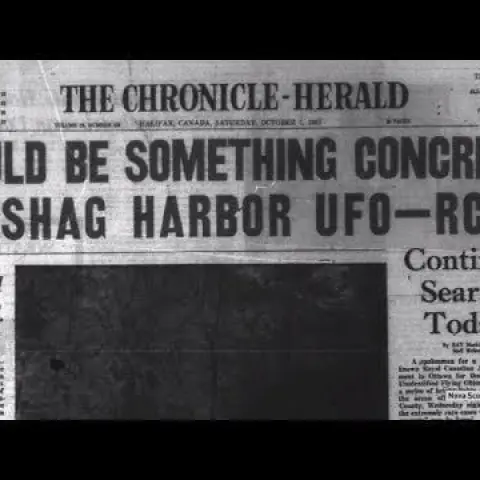
The Chronicle-Herald gave the reports extensive front-page coverage. On 7 October 1967 it ran a story by Ray MacLeod headlined "Could Be Something Concrete in Shag Harbour UFO – RCAF". It included witness descriptions, the search-and-rescue effort and the Navy's continuing underwater search, which had added three more divers. The head of the Air Desk, Squadron Leader Bain, said the Air Force was "very interested". "We get hundreds of reports every week, but the Shag Harbour incident is one of the few where we may get something concrete on it," he said. On 9 October the paper reported "UFO Search Called Off". The Navy had ended its intensive undersea search, finding "Not a trace... not a clue... not a bit of anything". The Canadian Press carried the story of the abandoned search for a "mysterious dark object" in other papers.[1]
Later claims

The story faded quickly. Theories circulated that a Russian spacecraft had crashed, which supposedly explained the presence of a Russian submarine in the area, and that the United States had been involved in the follow-up, though the U.S. made no official statement. In 1993 the MUFON investigator Chris Styles revived the case. He traced original witnesses through newspaper clippings and, with fellow investigator Don Ledger, interviewed many of them.[2]
According to the accounts they gathered, from divers and other witnesses, the object had travelled about 25 miles underwater to Government Point, near a submarine-detection base. There, it was said, it was picked up on sonar and naval vessels were stationed over it. A second UFO supposedly joined it, apparently to help, as the military planned a salvage operation. After about a week of watching, some vessels were sent to investigate a Russian submarine in Canadian waters. The two objects then supposedly headed for the Gulf of Maine, outran the pursuing ships, surfaced and shot into the sky. The witnesses spoke only off the record, the ex-servicemen fearing loss of their pensions and the civilians ridicule. These claims are not supported by official records.[1][2]
Legacy

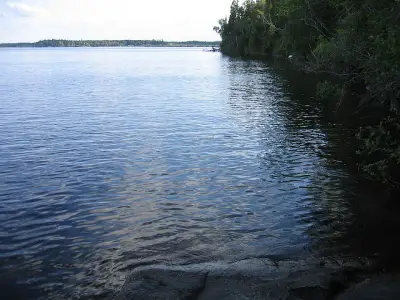
The Shag Harbour Incident Interpretive Centre, at 5615 Highway 3, shows television documentaries, newspaper articles, memorabilia and an exhibit on outer space. About three minutes up the road, a UFO gazebo and picnic site look out over the water where the object came down. An annual UFO festival is held in October. The municipality calls the case one of the best-documented UFO events of the past 40 years.[2][5]
References
- Shag Harbour UFO incident — Wikipedia · en.wikipedia.org
- "Shag Harbour UFO Incident", Municipality of the District of Barrington · barringtonmunicipality.com
- "The man who phoned in Canada's most famous UFO sighting became the face of the mystery", CBC News · cbc.ca
- Library and Archives Canada, UFO files · collectionscanada.gc.ca
- Shag Harbour UFO Centre — Tourism Nova Scotia · novascotia.com
- Condon Report, Case 34: Canadian Naval Maritime Command, North Atlantic, Fall 1967 (Scientific Study of Unidentified Flying Objects, 1968) · files.ncas.org
Facts in this article are drawn in part from the Wikipedia article “Shag Harbour UFO incident”, available under the CC BY-SA 4.0 licence.
🛸 Sightings & submissions about this 6
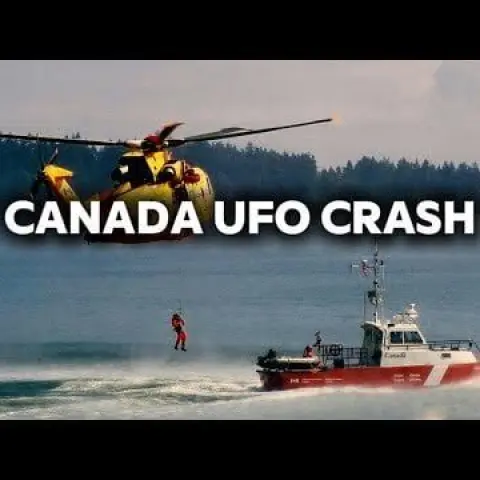 The Shag Harbour UFO Crash: Canada’s RoswellRoswell
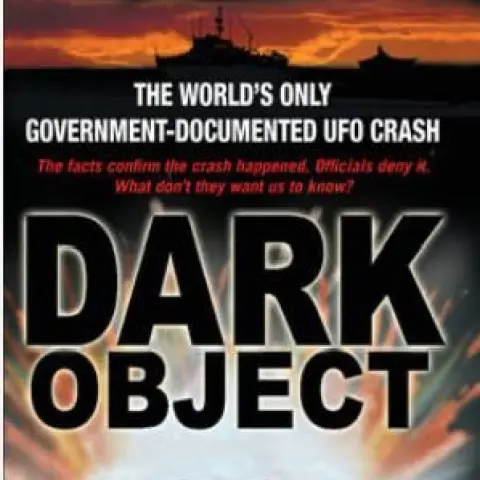 Anyone familiar with the Shag Harbour crash? The book called Dark Object follows the incidents, it’s a must have for UFO nuts.
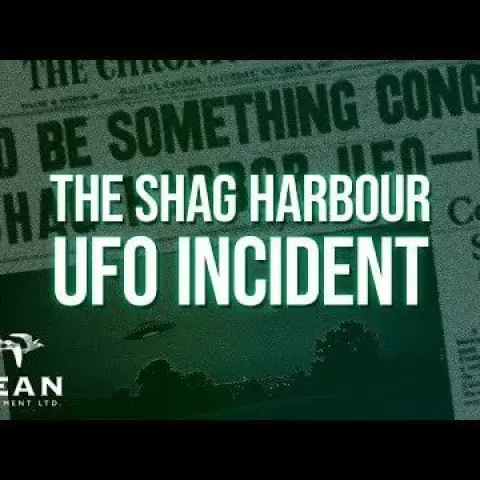 The Shag Harbour UFO Incident - Full DocumentaryShag Harbour
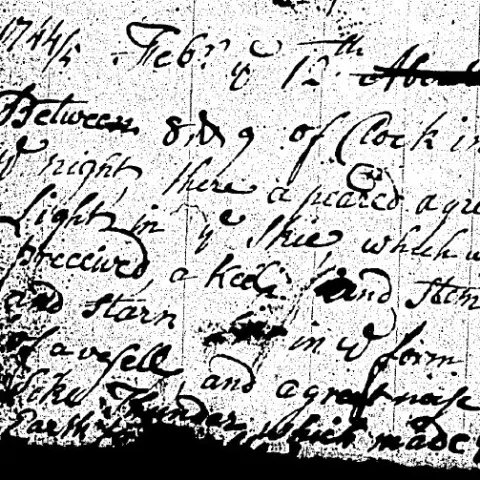 UFO in Nova Scotia in 1745?Nova Scotia
 Shag Harbour's UFO mystery: CBC Nova ScotiaNova Scotia
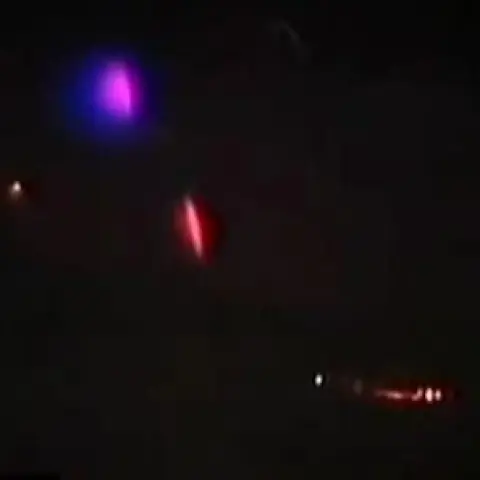 An hour before the Shag Harbour sightings, Wilfred Eisnor took this photograph in Puffy Cup Cove (1967).Puffy Cup Cove
This page was last edited on 31 October 2026. Articles are written in our own words from the sources listed under References; disputed claims are attributed to the people who made them.
No discussion yet.