How to report a UFO
From the UAP Encyclopedia, the open encyclopedia of UFO and UAP history · 🧭 Topic overview
Contents 12

| Type | Topic overview |
|---|---|
| Also known as | Reporting a UFO sighting, UAP reporting |
| Note first | Time, place, direction, how long |
| Where to report | ufos.dev, NUFORC, MUFON; AARO for government personnel |
If you see something in the sky you cannot identify, a careful report helps others check it — and most sightings can be explained once the time, place and direction are known.[1][5] This guide covers what to record, how to film it, the common explanations to rule out, and where to send a report.
Investigators have long found that the hardest part of identifying a UFO is the poor quality of the information: most witnesses are not trained in astronomy, aviation or atmospheric science, and the details that would settle a case are often missing.[5] A good report fixes that.
1. Record the facts straight away

Write these down as soon as you can — memory changes quickly, especially after talking to other witnesses:[1][5]
- When. The exact date and time (to the minute if possible), and how long you watched.
- Where. Your location — an address or a map pin — and whether you were indoors, outdoors or in a moving vehicle.
- Direction. Which way you were looking (north, south-west…) and how high above the horizon the object was.
- Appearance. Shape, colour, any lights and whether they blinked or were steady, and its size compared with something familiar (the full Moon, a coin at arm's length).
- Movement. Did it move in a straight line, hover, change direction or speed, or fade out? How did it leave?
- Sound. Any sound, or none.
- Conditions. Clouds, wind, haze or rain, and whether the Moon or bright planets were visible.
- Other witnesses. Who else saw it, and whether they describe the same thing.
2. Film it well

- Steady the camera. Rest the phone on a wall, a car roof or a tripod; shaky hands make a point of light appear to dart and zigzag.
- Go easy on zoom. Heavy digital zoom and autofocus "hunting" turn distant lights into blobs, discs and odd shapes. Film wide first, then zoom a little.
- Include the ground. Keep a tree, roofline or horizon in shot so the object's motion and direction can be measured.
- Keep the original file. Re-shared copies on social media lose the time, location and quality data that investigators need. Do not edit or filter it.
- Say what you see. Narrating the time, direction and what you notice into the video is very useful later.
Photographs and video are only part of the picture: many famous cases were explained by measuring what the camera showed against the sky at the time.[5]
3. Check the common explanations

Most UFO reports turn out to be ordinary things seen in unusual conditions.[1][5] In two large studies of reports, astronomical objects, aircraft and balloons accounted for 83–86% of the cases that could be identified; in one, bright stars and planets alone made up 29% of all cases and meteors 9%.[5] The usual suspects:
- Venus and Jupiter. After the Sun, Moon and International Space Station, Venus is the brightest thing in the night sky and is often low in the west after sunset or the east before dawn. It can appear to "follow" a car and twinkle in colours near the horizon. Even experienced pilots and astronauts have been fooled.[5] See Venus misidentification.
- Satellites and Starlink trains. A steady light gliding across the sky with no blinking is usually a satellite; a line of evenly spaced lights shortly after launch is a Starlink "train".
- Rocket launches. A glowing spiral, jellyfish or cone of light after sunset or before dawn is often a launch seen from far away.
- Meteors and fireballs. Bright fireballs can leave a glowing trail and are seen over huge areas, but they are hard to predict, which makes them harder to rule out after the fact.[5]
- Aircraft. Planes approaching an airport at night with their landing lights on can seem to hover for minutes; helicopters and blimps really do hover.[5]
- Balloons and lanterns. Weather balloons, party balloons and sky lanterns drift with the wind; Google's Project Loon test balloons were reported as UFOs, and its team even used the reports to track them.[5]
- Drones. Since the 2010s many reports have turned out to be drones.[5]
On ufos.dev, reports are checked automatically against rocket launches, Starlink passes, fireballs, planets and recorded flights for that time and place, and the What was that last night? page shows what was in the sky on any night. See identified flying objects.
None of this means your experience was not real. An explanation after the fact is an analysis of what was seen, not a judgment that nothing was seen.[5]
4. Where to report

ufos.dev
Report a sighting here, with photos or video. It appears on the map, is checked against the sky that night, and other members can add their own reports if they saw the same thing.
The National UFO Reporting Center (NUFORC)
NUFORC is a non-profit organisation in Washington State, founded in 1974 by Robert J. Gribble, that documents UFO sightings. It has catalogued almost 170,000 reports and runs a 24-hour hotline for sightings happening now, as well as an online form for written reports.[2][7] Its director since 1994, Peter Davenport, has described being overwhelmed by reports of ordinary things such as satellites, the space station and twinkling stars — another reason to check the common explanations first.[2][5] Police departments in places such as Arizona often refer callers to NUFORC.[2]
The Mutual UFO Network (MUFON)
MUFON is a US-based volunteer organisation founded in 1969 that claims more than 4,000 members, over 500 trained field investigators and a case management system for reports on its website.[3][8] Its investigators must pass an exam and a background check, though critics have questioned their qualifications and the organisation's drift toward pseudoscience.[3]
The Pentagon's AARO
The US Defense Department's All-domain Anomaly Resolution Office, set up in 2022, collects reports of unidentified objects from military personnel and investigates them.[4] Its secure reporting route is for current and former US government employees, service members and contractors with knowledge of government programmes or events, not for general public sightings.[4][6] Its director, Jon Kosloski, said in 2026 that there "should be no stigma associated with reporting UAP; reporting is in the national security interest."[4]
Pilots
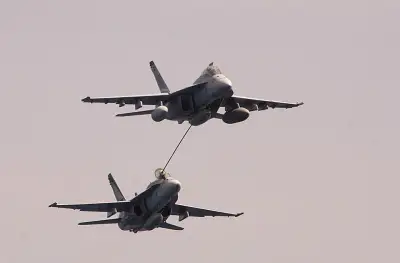
Military pilots now have formal channels: encounters such as the 2004 Nimitz "Tic Tac" case helped prompt the US Navy's 2019 decision to encourage its pilots to report UAP.[9]
Safety and the police
If a drone or other object is a safety risk — near an airport, over a crowd or around critical infrastructure — contact the local police straight away. During the 2024 New Jersey drone sightings the FBI warned residents not to shoot at drones or point lasers at aircraft.[10]
Afterwards

Keep your notes and original files, and write down anything you remember later, marking it as added later. If an explanation turns up, record it with your report — explained sightings are useful too, because they show what people mistake for UFOs.[5]
See also: identified flying objects, Are aliens real?, famous UFO hoaxes.
References
- Unidentified flying object — Wikipedia · en.wikipedia.org
- National UFO Reporting Center — Wikipedia · en.wikipedia.org
- Mutual UFO Network — Wikipedia · en.wikipedia.org
- All-domain Anomaly Resolution Office — Wikipedia · en.wikipedia.org
- Identification studies of UFOs — Wikipedia · en.wikipedia.org
- All-domain Anomaly Resolution Office (AARO) · aaro.mil
- National UFO Reporting Center (NUFORC) · nuforc.org
- Mutual UFO Network (MUFON) · mufon.com
- USS Nimitz UFO incident — Wikipedia · en.wikipedia.org
- "FBI warns New Jersey residents not to shoot down drones or point lasers at aircraft", Fox 26 Houston (December 2024) · fox26houston.com
Facts in this article are drawn in part from the Wikipedia articles “Unidentified flying object”, “National UFO Reporting Center”, “Mutual UFO Network”, “All-domain Anomaly Resolution Office”, “Identification studies of UFOs”, “USS Nimitz UFO incident”, available under the CC BY-SA 4.0 licence.
This page was last edited on 14 November 2026. Articles are written in our own words from the sources listed under References; disputed claims are attributed to the people who made them.



No discussion yet.