Clyde Tombaugh
From the UAP Encyclopedia, the open encyclopedia of UFO and UAP history · 👤 Person
Contents 7
Summary
Clyde Tombaugh was an American astronomer and telescope maker. He discovered Pluto in 1930 while working at the Lowell Observatory in Flagstaff, Arizona. He also built numerous telescopes, discovered multiple asteroids and a periodic comet, and later taught astronomy at New Mexico State University.

| Type | Person |
|---|---|
| Also known as | Tombaugh |
Clyde William Tombaugh (4 February 1906 – 17 January 1997) was an American astronomer and telescope maker who discovered Pluto in 1930. It was the first known object in what is now called the Kuiper belt.[1][2] The Wikipedia account calls him probably the most eminent astronomer to have reported seeing unidentified flying objects.[1] His August 1949 sighting of a formation of faint rectangular lights over Las Cruces, New Mexico, is often cited by UFO writers. He himself rejected the spaceship interpretation often attributed to him and favoured an atmospheric optical effect.[1] In the 1950s he led an Army-funded search for small natural satellites of the Earth, which became tangled up in rumours about flying saucers. In his later years he supported continued study of UFOs.[1]
Early life
Tombaugh was born in Streator, Illinois, the first of six children of Muron Dealvo Tombaugh, a farmer, and Adella Pearl Chritton.[1][2] The earlier version of this article said only that he was raised on a Kansas farm. He was born in Illinois, and the family moved to a farm near Burdett, Kansas, in 1922 after poor harvests.[1] His interest in astronomy seems to have begun with a visit to Yerkes Observatory in 1918, at the age of 12. An uncle who was an amateur astronomer encouraged him and gave him books.[1] He had to leave high school for a year to help on the farm and graduated in 1925. A hailstorm in June 1928 destroyed the family's crops and, with them, his plans for college.[1][2]
Lowell Observatory and Pluto

From 1926 Tombaugh built his own telescopes, grinding the lenses and mirrors himself. To test his mirrors he dug a pit 24 feet long and 8 feet deep, where the air temperature stayed steady.[1] Space.com describes a 23-centimetre reflector he built in 1928 from the crankshaft of a 1910 Buick and parts of a cream separator. Over his life he built more than 30 telescopes.[2] With it he drew Jupiter and Mars and sent the drawings to Lowell Observatory in Flagstaff, Arizona, hoping for comments. Instead the observatory offered him a job. It wanted an amateur to run its new photographic telescope in the hunt for "Planet X", which Percival Lowell had predicted.[1][2] He worked there from 1929 to 1945.[1]
- The method. From 6 April 1929 he used Lowell's 13-inch astrograph to photograph the same patches of sky several nights apart. He then flicked between each pair of plates with a blink comparator, so that a moving object would appear to jump while the stars stayed put. Space.com says each pair could hold from 150,000 to nearly a million stars and took about a week to examine.[1][2]
- The discovery. On 18 February 1930 he spotted a moving object on plates taken the previous month, close to Lowell's predicted position. Lowell Observatory announced it on 13 March.[1][2]
- The name. The name Pluto was proposed by an 11-year-old English girl, Venetia Burney, and adopted on 1 May 1930.[1][2]
- Degrees. He later earned bachelor's and master's degrees in astronomy from the University of Kansas, in 1936 and 1938.[1]
Pluto proved too small to be the planet Lowell expected. Tombaugh searched for more trans-Neptunian objects for years, but no others were found until 1992. In 2006 the International Astronomical Union reclassified Pluto as a dwarf planet.[1][2] His widow Patricia said he would have accepted the decision as a scientist, and Hal Levison remarked that Tombaugh had in effect discovered the Kuiper belt.[1] Tombaugh is also credited with:[1][2]
- 15 asteroids, out of nearly 800 he observed;
- a periodic comet;
- hundreds of variable stars, plus star clusters, galaxy clusters and a supercluster;
- possibly the Perseus–Pegasus Filament (1936), one of the largest known structures in the universe.
The Royal Astronomical Society awarded him the Jackson-Gwilt Medal in 1931.[1]
War work and New Mexico
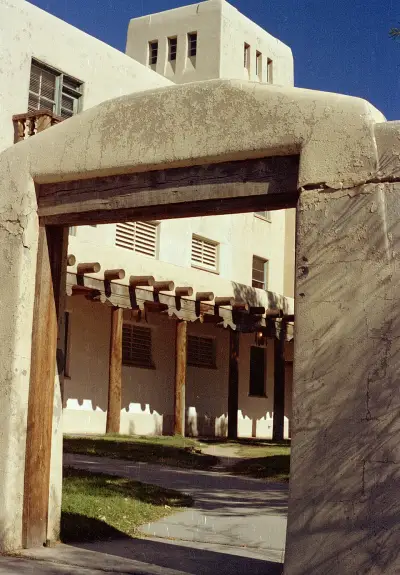
During the Second World War Tombaugh taught navigation to naval personnel. The Wikipedia account names the school as Northern Arizona University; Space.com calls it Arizona State College.[1][2] He then worked at White Sands Missile Range in New Mexico. Space.com places him at its ballistics research laboratory after the war; the Wikipedia account says the early 1950s.[1][2] From 1955 until he retired in 1973 he taught astronomy at New Mexico State University. There he led the Planetary Patrol project, which helped determine Mercury's rotation period, monitored Jupiter's Great Red Spot, and developed photographic techniques for satellite searches.[1][2]
His UFO sightings
On 20 August 1949, near his home in Las Cruces, Tombaugh saw six to eight faint rectangular lights moving across the sky. He watched them for about three seconds; his wife saw them for about a second and a half.[1] He wrote that he doubted the phenomenon was "any terrestrial reflection", because nothing like it had appeared before or since, and that he had been "petrified with astonishment".[1] He did not, however, believe he had seen a spaceship:[1]
- Life elsewhere. His study of the solar system left him unable to take seriously any intelligent life on other planets, even Mars.
- Interstellar visits. He thought the odds of a visit from planets around nearby stars in any given century were overwhelmingly against it.
- His explanation. The faintness of the lights and the way they dimmed as they moved from the zenith toward the south-eastern horizon suggested a reflection from a boundary between air layers of slightly different refractive index, as in a temperature inversion.
- Rarity. He had never seen anything like it again, despite much time under good night skies. He took that as a sign of rare conditions, but nothing like the odds against an interstellar visit.
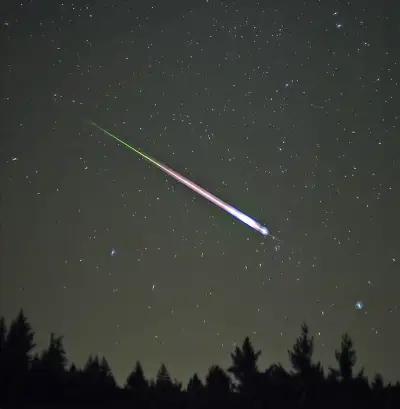
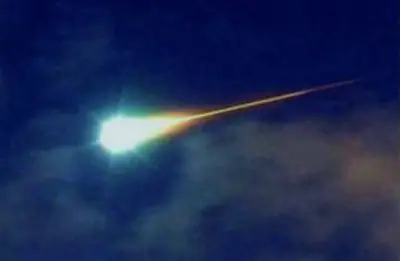
A year or two later, at a White Sands observatory, he saw an object of magnitude −6, four times brighter than Venus at its brightest. It travelled from the zenith to the southern horizon in about three seconds and made the same manoeuvres as in his first sighting.[1] He also reported seeing three of the green fireballs that appeared over New Mexico from late 1948 into the early 1950s.[1] Yet a researcher on Project Twinkle, the Air Force study of those fireballs, reported that Tombaugh had "never observed an unexplainable aerial object" despite his extensive watching of the sky.[1]
In January 1957, an Associated Press article in the Alamogordo Daily News struck a different note. Tombaugh was quoted as saying that other stars might have "hundreds of thousands of habitable worlds" whose inhabitants could have mastered the power to cross interstellar space. He said he had seen phenomena he could not explain, though none since 1951 or 1952. These things, he said, "do appear to be directed" and seemed not to obey the ordinary laws of celestial motion.[1] In 1949 he had also told Commander Robert McLaughlin, the Navy's missile director at White Sands, about a bright flash he had seen on Mars on 27 August 1941. He now attributed it to an atomic blast, and remarked that the first atomic test in New Mexico would have lit up the night side of the Earth "like a neon sign".[1]
In June 1952, the astronomer J. Allen Hynek, then scientific consultant to the Air Force's Project Blue Book, quietly surveyed fellow astronomers at a convention about their sightings and attitudes. Tombaugh was one of five, along with Lincoln LaPaz of the University of New Mexico, who told Hynek of sightings. Tombaugh offered his telescopes to the Air Force for photographing UFOs, provided he was properly alerted.[1]
The satellite search
That offer may have led to Tombaugh's role in a search for small objects orbiting near the Earth. The search was announced in late 1953 and sponsored by the Army Office of Ordnance Research. A March 1954 statement presented it as a hunt for natural objects that could serve as space stations.[1] The rumours and denials ran as follows:[1]
- Keyhoe's claim. Donald Keyhoe, later director of NICAP, said a Pentagon source told him the real reason was that new long-range radar had picked up two objects in near-Earth orbit in summer 1953. By May 1954 he was saying the search had succeeded.
- Aviation Week. On 23 August 1954 the magazine reported that two "natural satellites" had been found only 400 and 600 miles out, implying they had recently been captured, which is a near impossibility. Major newspapers repeated the story the next day.
- The New York Times. On 29 August the paper quoted a source close to the Ordnance Research office calling the report "quite accurate" and naming LaPaz as having identified the objects as natural. The same source said there was no connection with flying saucer reports.
- LaPaz. In an October issue, LaPaz called the article "false in every particular" as far as it concerned him.
- Tombaugh. In October 1955 Popular Mechanics found him "closemouthed" about his results. He said the reports of satellites at 400 and 600 miles were not correct and that the search had no connection with so-called flying saucers.
- The outcome. At a meteor conference in Los Angeles in 1957 he said his four-year search had been unsuccessful. His 1959 final report stated that nothing had been found.
Later life and legacy

After retiring in 1973, Tombaugh went on building telescopes, supported observing programmes, and advocated the continued study of UFOs.[1] Honours and later milestones include:[1]
- induction into the International Space Hall of Fame (1980);
- Out of the Darkness: The Planet Pluto, written with Patrick Moore (1980);
- the American Academy of Achievement's Golden Plate Award (1991).
He married Patricia Edson in 1934, and they had two children, Annette and Alden. He was an active Unitarian Universalist and helped found the Unitarian Universalist church in Las Cruces.[1][2] In 1992 a Jet Propulsion Laboratory scientist, Robert Staehle, phoned to ask permission to visit "his" planet. Tombaugh replied that he was welcome to it, though it would be a long, cold trip. The call eventually led to NASA's New Horizons probe, launched in 2006.[1] Tombaugh died at home in Las Cruces on 17 January 1997, aged 90, and was cremated. A small portion of his ashes was placed aboard New Horizons. After it flew past Pluto on 14 July 2015, the bright heart-shaped region was named Tombaugh Regio.[1][2] His personal 16-inch telescope was reassembled and dedicated in 2009 at Rancho Hidalgo, near Animas, New Mexico.[1]
References
- Clyde Tombaugh — Wikipedia · en.wikipedia.org · archived copy
- "Clyde Tombaugh: Astronomer who discovered Pluto", Space.com · space.com · archived copy
Facts in this article are drawn in part from the Wikipedia article “Clyde Tombaugh”, available under the CC BY-SA 4.0 licence.
This page was last edited on 31 October 2026. Articles are written in our own words from the sources listed under References; disputed claims are attributed to the people who made them.
No discussion yet.