Manises UFO incident
From the UAP Encyclopedia, the open encyclopedia of UFO and UAP history · 🛸 Case
Contents 8
Summary
The Manises UFO incident occurred on the night of November 11–12, 1979, over the Mediterranean near Ibiza and at Manises Airport in Valencia, Spain. A commercial airliner carrying 109 passengers was forced to make an emergency landing after its crew reported being pursued by fast-moving lights, prompting the Spanish Air Force to scramble a Mirage fighter jet to intercept the objects. Although official research later suggested the crews were misled by refinery flare stacks and celestial bodies, the witnesses rejected this explanation.

| Type | Case (airliner diversion and fighter intercept) |
|---|---|
| Spanish name | Incidente OVNI de Manises |
| Date | Night of 11–12 November 1979 |
| Place | Over the Mediterranean near Ibiza; Manises Airport, Valencia, Spain |
| Aircraft | TAE Super Caravelle, flight JK-297 (109 passengers); Spanish Air Force Mirage F1 of Ala 14 |
| Pilots | Capt. Francisco Javier Lerdo de Tejada, co-pilot Ramón Zuazu; Capt. Fernando Cámara (Mirage) |
| Air Force file | Compiled 1994; declassified 1994–1996 |
| Proposed explanation | Flare stacks of the Escombreras refinery near Cartagena; stars and planets |
| Also known as | Manises incident |
The Manises UFO incident took place on the night of 11 November 1979, when a Spanish charter airliner carrying 109 passengers made an emergency landing at Manises Airport in Valencia after its crew reported red lights closing on the aircraft over the Mediterranean near Ibiza. It was reported as the first time in Spanish history that a commercial flight had been forced to land because of a UFO. After the landing, a Spanish Air Force Mirage F1 was sent up from Los Llanos Air Base to intercept the lights. The journalist Javier Cavanilles has called it "the most famous UFO case in Spain", and it is one of the most complete and complex cases in Spanish ufology.[1][2][5]
Officials told the Spanish parliament that only "lights" had been seen, and later research based on the declassified Air Force file suggested the crews had been misled by flares from a distant refinery and by stars and planets — an explanation the witnesses have rejected.[1][5]
The flight
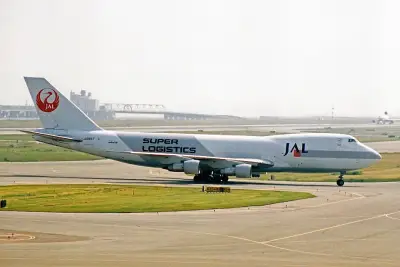
The aircraft was a Super Caravelle of the Spanish charter company TAE (named in sources as Transportes Aéreos Españoles or Trabajos Aéreos y Enlaces, since defunct), operating flight JK-297. It had taken off from Salzburg, Austria, with 109 German and Austrian tourists, and refuelled at Palma de Mallorca before setting course for Las Palmas de Gran Canaria and Tenerife.[1][2][3][5]
At about 11 p.m., about ten miles from Ibiza, Captain Francisco Javier Lerdo de Tejada, his co-pilot Ramón Zuazu and the crew saw a set of lights, changing between red, white and green, approaching fast and apparently on a collision course. The captain asked ground control about any traffic that could explain them, but neither the military radar at Torrejón de Ardoz near Madrid nor the Barcelona control centre could. He climbed to avoid a collision, but the lights did the same and stayed about half a kilometre away. Unable to evade them, he diverted and requested an emergency landing at Manises. According to El País, the pursuit lasted for about seventy miles.[1][2][5]
The captain's account
Speaking to reporters in Arrecife, Lanzarote, a few days later, Lerdo de Tejada — who had served six years in the Spanish Air Force and nine as a commercial pilot — said: "What I saw was an unidentified flying object," adding that he had "never known such danger" and that "whatever the objects were, they were certainly interested in my piece of metal". He described two very strong red lights that moved very fast and kept together, staying with his plane for ten minutes or more. He said he first saw them at 23,000 feet, about 15 miles away; at 28,000 feet they were half a mile away, and at 29,000 feet "on top of me on a collision course". He had ordered the passengers to fasten their seat belts and switched on his landing lights. Barcelona control saw nothing, but the Air Force radar in Madrid picked the objects up once they were very close. When he turned sharply away, he said, they followed him down 12,000 feet in 30 seconds, and disappeared when he was 30 miles from Valencia. He said he later spoke to the Mirage pilot, who confirmed what he had seen.[3]
The landing

The crew reported that the lights abandoned the chase just before landing, which took place at about 11 p.m. However, radar then detected three unidentified objects, each estimated at 200 metres across, and the lights were seen by many witnesses on the ground, including the officer on duty, Captain Juez. According to El País, airport staff watched the lights that had followed the Caravelle hold position about 9,000 feet above the airport. One passed very close to the runway, and ground staff switched on the emergency lights in case it was an unregistered aircraft in trouble.[1][2][5]
The passengers were told the landing was due to a fault and were put up in a hotel for the night. Some of them believed the UFO story was a smokescreen for a mechanical failure, but the captain said he had noticed nothing technically wrong with the aircraft. The Caravelle left Manises for the Canary Islands at midday the next day, and the airport reported the events to the military authorities.[2][3]
The Mirage intercept

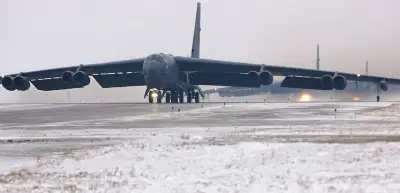
As the airliner sought permission to land, Manises civil air traffic control asked the Air Force to send military aircraft to identify the lights. At about 12:40 a.m. a Mirage F1 of Ala 14 (14th Wing) took off on a scramble from Los Llanos Air Base in Albacete, flown by Captain Fernando Cámara, later a colonel. He soon found a large red light hovering over Manises Airport. He had to accelerate to supersonic speed — Mach 1 or 1.4, according to different sources — to get a visual sighting of what he described as a truncated cone, like an upturned cup without its base, that changed colour, but it soon disappeared. El País reported at the time that the lights vanished when four Phantom jets from Albacete flew over the area.[1][2][5]
Cámara was told of a new radar echo, perhaps the same object, over Sagunto. When he got close, the object accelerated away again, but this time his radar-warning receiver indicated that his fighter was being illuminated by a continuous-wave radar like those used by surface-to-air missiles — in military terms an aggressive act. His voice communications with the military controller, "Pegaso", at Torrejón, were also disrupted even when he changed channels, and he said his systems were jammed when he tried to lock an infrared missile onto the object. The same thing happened a third time, and the object finally disappeared heading toward Africa. After an hour and a half, low on fuel, Cámara returned to Los Llanos.[1][5]
Other reports
The Ministry of Defence file also includes a letter from an anonymous witness who said that at about 8:15 p.m. that evening, waiting with others at a bus stop in Sant Adrià de Besòs near Barcelona, he saw a light and that a few minutes later the area went dark; he enclosed a drawing. It also cites a report in the newspaper Pueblo on 21 November 1979 of a light photographed by a mechanic in Sóller, Mallorca, early on 12 November.[5]
Official explanations

By September 1980 the case had reached the Spanish parliament, where the socialist deputy Enrique Múgica Herzog asked for an official explanation. The reply said there was no proof that any physical object existed, only "lights", and attributed the episode to a series of freak optical illusions.[1][5]
The Spanish Air Force file on the case, compiled in 1994, was declassified in the mid-1990s (1994 or 1996, according to different sources). The Ministry of Defence's assessment rejected the idea of a reflection, since other lights would also have been reflected, and ruled out another aircraft, a helicopter — the lights moved too fast — and the U.S. Sixth Fleet, whose command wrote to say it had not been in that airspace. It considered stars only faintly, noting that radar echoes and visual sightings from the ground made such explanations weak, and concluded that the origin of the lights could not be found but that they "confirm the existence of uncontrolled traffic in the area, of unknown origin". The Mirage's in-flight problems were not mentioned in the public release.[1][5]
The refinery hypothesis
Several years later the agricultural engineer Juan Antonio Fernández Peris used the Air Force file for a 200-page study, published by the Fundación Anomalía in 2000 as El expediente Manises. It proposed that the Caravelle crew, Manises air traffic control and Captain Cámara had been misled by flashes from a distant industrial complex, about 100 miles (160 km) from Manises — identified as the flare stacks of the Escombreras refinery near Cartagena — which exceptional visibility and a temperature inversion could have made visible from the aircraft, appearing to be in the sky. Tension and the unusual atmospheric conditions, it argued, primed the Mirage pilot to chase any light, while several bright planets were visible at the time. Although much debated and repeatedly rejected by the witnesses, this is the main non-UFO explanation.[1][4][5]
The Mirage's electronic problems have been attributed to powerful electronic-warfare equipment of the U.S. Sixth Fleet, which was in the area on alert during the Iran hostage crisis. Cámara rejected this, saying the fleet was too far away and that his systems were jammed precisely when he tried to lock onto the object, and he has disagreed with the refinery explanation. The case has been the subject of several Spanish books, including J. J. Benítez's Incidente en Manises (2000) and a chapter of Bruno Cardeñosa's El misterio Ovni (2010) calling it "the best UFO case in history".[1][5]
References
- Manises UFO incident — Wikipedia · en.wikipedia.org · archived copy
- "Un 'ovni' forzó el aterrizaje de un Caravelle en Manises", El País (13 Nov 1979) · elpais.com · archived copy
- "'UFOs' force Spanish pilot to land", The Guardian (from the archive, 14 Nov 1979) · theguardian.com · archived copy
- Juan Antonio Fernández Peris, "The Manises UFO file", Academia.edu · academia.edu · archived copy
- Incidente OVNI de Manises — Wikipedia (in Spanish) · es.wikipedia.org
Facts in this article are drawn in part from the Wikipedia articles “Manises UFO incident”, “Incidente OVNI de Manises (in Spanish)”, available under the CC BY-SA 4.0 licence.
🛸 Sightings & submissions about this 4
 I finally managed to record them !Valencia
 Hey all anyone seen this video before?
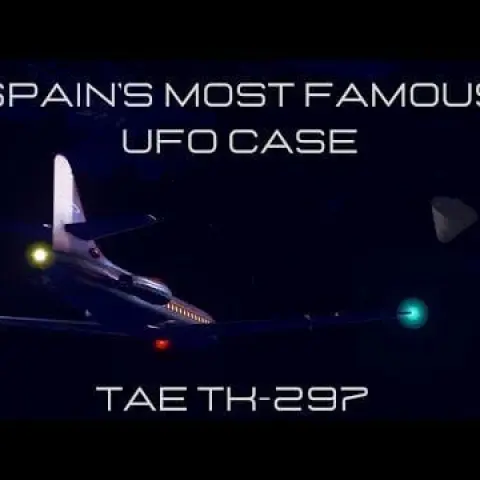 The Manises UFO incident - Spain's most famous UFO case and the first occurrence of a commercial flight being grounded due to UFOsNov 11, 1979 · Spain
 Sighting of rhomboidal/triangular UFO by members of the Spanish military. Agoncillo military airfield July 20, 1978, Spain.Jul 20, 1978 · Spain
This page was last edited on 31 October 2026. Articles are written in our own words from the sources listed under References; disputed claims are attributed to the people who made them.
No discussion yet.