Types of aliens
From the UAP Encyclopedia, the open encyclopedia of UFO and UAP history · 🧭 Topic overview
Contents 12

| Type | Topic overview |
|---|---|
| Also known as | Alien types, kinds of aliens |
| Most reported | Greys |
| Other common types | Nordics, reptilians, "little men", insect-like beings |
| Evidence | Witness accounts only |
UFO reports, abduction stories and contactee claims describe a handful of recurring types of aliens. The best known are the small, big-eyed greys, the tall, human-looking Nordics, the shape-shifting reptilians, the cartoon little green men, the mantis-like insectoids and the pale Tall Whites of Charles Hall's books.[1][2][3][4][7][9]
All of these descriptions come from witness testimony — sometimes recalled under hypnosis — and from books by people who say they have met the beings. No physical remains or other verified evidence of any of them exist.[1][6] Researchers note how closely the descriptions follow science fiction and popular culture of their time, and how the "typical" alien has changed from decade to decade.[1][8][14]
This page is an overview. Each type has its own full article, linked below.
Greys

The greys are the classic alien of modern ufology: about a metre tall, with grey skin, a large hairless head, and big black almond-shaped eyes, with a small nose and mouth.[1] The image took shape with the 1961 Betty and Barney Hill abduction case — one of the first widely publicised abduction claims — whose description of beings with oversized heads, big eyes, pale grey skin and small noses "captivated the public imagination" and was later used by television and film.[14] It became iconic through the cover of Whitley Strieber's Communion (1987).[1]
Greys dominate modern abduction accounts, which describe them carrying out medical examinations and, in the claims of researchers such as Budd Hopkins and David M. Jacobs, a programme to breed human–alien hybrids.[6] Sceptics have traced the look to earlier science fiction.[1]
Full article: Grey alien.
Nordics

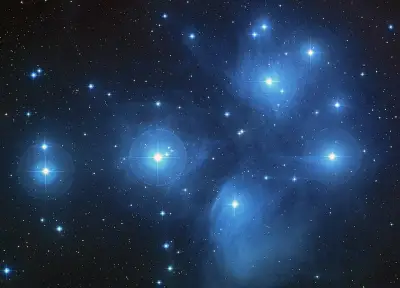
Nordics are tall, fair-haired, blue-eyed and human-looking, roughly 1.8–2.1 metres tall, and are often said to come from the Pleiades star cluster.[2] They were the "space brothers" of the 1950s contactees — above all George Adamski, who said he met a Venusian named Orthon in the California desert in 1952 — and they typically warned humanity against nuclear war.[2] In the 1970s the Swiss contactee Billy Meier made the Pleiades their favourite home.[2] Claims of Nordic contact became rarer as the grey took over most encounter reports, but some modern experiencers describe Nordics as protectors.[2]
Full article: Nordic aliens.
Reptilians

Reptilians — also called reptoids, saurians, draconians or "lizard people" — are scaly, human-sized beings that can supposedly take human form.[3] The idea that shape-shifting reptilians secretly control the world was popularised by the British conspiracy theorist David Icke from his book The Biggest Secret (1999). Political scientist Michael Barkun traces the idea back to Robert E. Howard's pulp story "The Shadow Kingdom" (1929), and critics have pointed to antisemitic themes in Icke's version.[3] A few abduction accounts, such as that of Nebraska police officer Herbert Schirmer in 1967, describe beings with a slightly reptilian look.[3]
Full article: Reptilians.
Little green men

"Little green men" are the stereotypical aliens of cartoons and jokes: small, green-skinned, often with antennae.[4] The phrase was already used for goblins and imaginary beings before it attached itself to flying-saucer occupants in the late 1940s, and it was almost always used mockingly.[4] The best-known case linked to it, the 1955 Kelly–Hopkinsville encounter, involved creatures the witnesses described as silvery; a newspaper added the "green".[4][5] In 1967 astronomers jokingly nicknamed the first pulsar signal "LGM-1" for "little green men".[4]
Full article: Little green men.
Insectoids

Insectoid or "mantis" beings are tall, thin, insect-like entities reported in a minority of abduction accounts. One early report, passed on by researcher Brian Thompson, concerned a nurse who said she met a 3-foot-tall mantis-like being in Cincinnati in 1957.[6] Insect-like aliens have been a fixture of science fiction since the Selenites of H. G. Wells's The First Men in the Moon (1901) and Georges Méliès's A Trip to the Moon (1902).[7]
Full article: Insectoid aliens.
Tall Whites

The Tall Whites are known almost entirely from Charles James Hall, a former US Air Force weather observer, who says he met them at the Indian Springs ranges of Nellis Air Force Base, Nevada, in 1965–67. He describes them as very tall and thin, with chalk-white skin, large blue eyes and nearly transparent blond hair, living in an underground base with the knowledge of senior officers. His account appears in the Millennial Hospitality books (from 2002), which he wrote largely from memory, and it has not been independently confirmed.[9]
Full article: Tall Whites.
Other reported beings

Many encounter reports describe beings that do not fit any of the main types. Some well-known examples:
- The Flatwoods monster (1952). In Flatwoods, West Virginia, a group of witnesses described a figure about 10 feet tall with a round, blood-red face inside a spade-shaped hood. Sceptic Joe Nickell concluded it was most likely a barn owl, with a meteor and an aircraft beacon accounting for the lights.[10] See Flatwoods monster.
- The Kelly–Hopkinsville "goblins" (1955). A Kentucky family described small figures, 2–4 feet tall, attacking their farmhouse; later reports added "large pointed ears, clawlike hands, eyes that glowed yellow". Nickell suggested great horned owls.[5]
- Antônio Vilas-Boas (1957). A Brazilian farmer said he was seized by 5-foot-tall humanoids in grey coveralls and helmets, with small blue eyes, who barked rather than spoke. His was one of the first abduction stories to receive wide attention.[13] See Antônio Vilas-Boas abduction.
- Pascagoula (1973). Charles Hickson said three "creatures" with "pincers" took him and Calvin Parker aboard a craft beside the Pascagoula River in Mississippi and examined them; an article under their names later called the creatures robotic and friendly.[11] See Pascagoula abduction.
- The Dover Demon (1977). Teenagers in Dover, Massachusetts, described a 4-foot being with glowing eyes, no visible nose or mouth and a watermelon-shaped head. No UFO was reported, though UFO groups investigated; explanations offered include a foal, a moose calf or a snowy owl.[12]
Where the types come from

Before flying saucers
People imagined inhabitants of other worlds long before UFOs. In the 2nd century the satirist Lucian's True History described a voyage to a populated Moon at war with the people of the Sun.[14] Early writers pictured such beings simply as people, indistinguishable from humans. After Charles Darwin's On the Origin of Species (1859), authors began to imagine aliens shaped by a different evolution; H. G. Wells's Martians in The War of the Worlds (1898) were a predator species, not people.[14]
The pulp magazines of the 1920s–1950s were full of aliens, most often from the planets and moons of the Solar System. Humanoids remained the most common type, alongside spider-like, octopus-like and other monsters.[14] So many were "bug-eyed monsters" — grotesque creatures with huge or compound eyes — that readers called them "BEMs".[8]
The changing alien
The aliens reported by witnesses have followed the fashions of their time. In the 1950s contactees met human-looking, benevolent Nordics with anti-nuclear messages.[2] In the contactee and abductee mythology, these friendly blond visitors were soon replaced by small, unfriendly bug-eyed creatures "closely matching in many respects the pulp cover clichés of the 1930s", which have remained the norm since the 1960s.[8] The greys took over after the Hill case and film and television of the 1960s–1970s, and the reptilian conspiracy spread through books and the internet from the 1990s.[1][3][14]
The abduction subculture that grew from the 1980s has built "a detailed mythos" in which the various aliens — greys, reptilians, Nordics and so on — have specific roles, origins and motivations.[6] Folklorist Thomas E. Bullard, who compared nearly 300 abduction reports, found that some elements were recent innovations with "no clear antecedents".[6]
Believers and sceptics
Some abduction researchers see the consistency of the descriptions as significant.[6] Mainstream scientists reject claims that abductions literally occur as reported, and critics such as Carl Sagan and Susan Clancy point to faulty memory, leading questions under hypnosis, sleep paralysis and the influence of popular culture.[6]
See also: alien abduction, contactees, ancient astronauts, Men in Black.
References
- Grey alien — Wikipedia · en.wikipedia.org
- Nordic aliens — Wikipedia · en.wikipedia.org
- Reptilian conspiracy theory — Wikipedia · en.wikipedia.org
- Little green men — Wikipedia · en.wikipedia.org
- Kelly–Hopkinsville encounter — Wikipedia · en.wikipedia.org
- Alien abduction — Wikipedia · en.wikipedia.org
- Insectoids in science fiction and fantasy — Wikipedia · en.wikipedia.org
- Bug-eyed monster — Wikipedia · en.wikipedia.org
- Michael E. Salla, "Interview with Charles Hall" (2004), mirrored at Biblioteca Pleyades · bibliotecapleyades.net
- Flatwoods monster — Wikipedia · en.wikipedia.org
- Pascagoula incident — Wikipedia · en.wikipedia.org
- Dover Demon — Wikipedia · en.wikipedia.org
- Antônio Vilas-Boas — Wikipedia · en.wikipedia.org
- Extraterrestrials in fiction — Wikipedia · en.wikipedia.org
Facts in this article are drawn in part from the Wikipedia articles “Grey alien”, “Nordic aliens”, “Reptilian conspiracy theory”, “Little green men”, “Kelly–Hopkinsville encounter”, “Alien abduction”, “Insectoids in science fiction and fantasy”, “Bug-eyed monster”, “Flatwoods monster”, “Pascagoula incident”, “Dover Demon”, “Antônio Vilas-Boas”, “Extraterrestrials in fiction”, available under the CC BY-SA 4.0 licence.
This page was last edited on 14 November 2026. Articles are written in our own words from the sources listed under References; disputed claims are attributed to the people who made them.

No discussion yet.